

We’re happy to answer any questions you might have, with no commitment to proceed with treatment.
23 November 2018
Scoliosis Survey
Results from our scoliosis patient survey data results are in
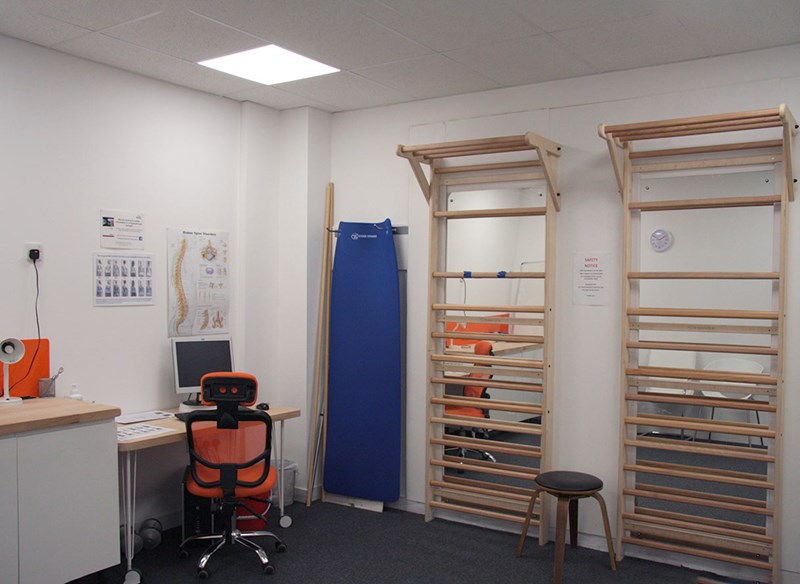
The London Orthotic Consultancy opened its scoliosis clinic in 2017 and, since then, we have treated many patients non-surgically with a combination of physiotherapy and spinal bracing, using the Cheneau-Gensingen brace. Scoliosis is incredibly common – around three to four in every 1000 children in the UK are affected – with symptoms typically noticed between the ages of 10 and 15.

Our treatment follows Schroth treatment, which uses physiotherapy and if appropriate a brace, to normalise the postural alignment of the spine through a series of customised exercises which are specific to each patient’s individual curve pattern. We have treated a wide age range of patients between the ages of three to 80 years old and recently held a scoliosis patient survey, of which we are proud to announce the results.
Part of the survey asked which part of the treatment package our scoliosis patients found to be the most supportive. The most appreciated forms of help and support throughout treatment were found to be, in order:
Single Patient Whatsapp group – During their first appointment, each scoliosis patient who takes part in our orthotic bracing programme for scoliosis is offered to set up an individual private Whatsapp group with their parents and our clinicians, so any questions can be answered. Any queries regarding the brace application or reassurance regarding what to expect in the initial stages can be provided quickly and efficiently by the orthotist and any extra instructions for the exercises can be provided by the therapist in the private group chat. Parents of younger patients are also encouraged to join a group private Whatsapp group for parents, and a private Facebook page to share advice and tips.
Saturday group sessions – On Saturday morning, LOC runs a group session for teenage scoliosis patients, where exercises can be monitored and postures can be improved and worked upon. Not only is it is a great opportunity for patients to share their tips and tricks, but it provides a hub for teenage patients which boosts their morale as they realise that other teenagers are going through this.
Patient progress – Using patient X-Rays and Cobb angle measurements and feeding these back to patients has been proven to motivate both patients and parents through treatment, to remind them to persevere and stick to their brace prescription and individual physiotherapy exercise program.
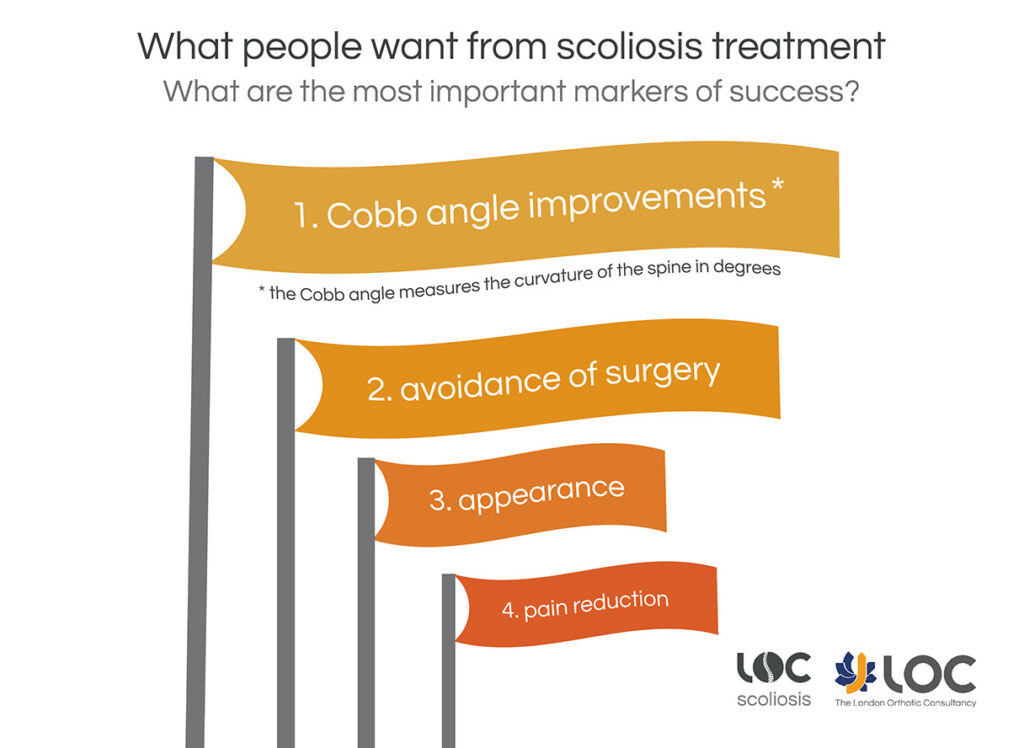
What do patients want to achieve from treatment?
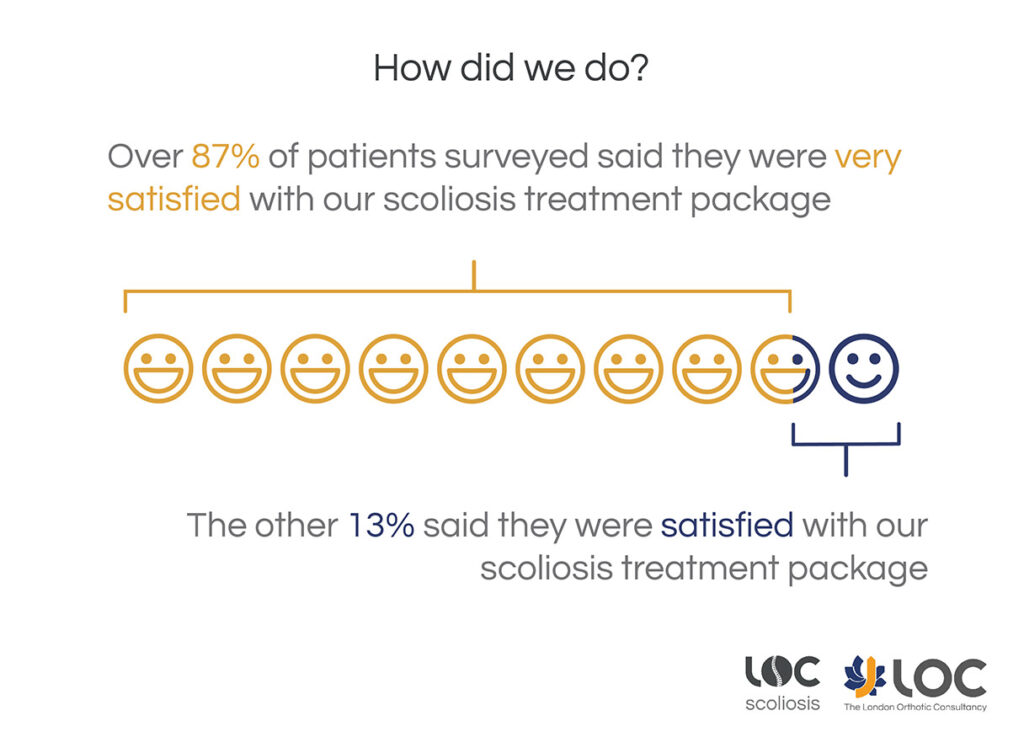
How did we do?
Over 87% of patients surveyed said they were ‘Very Satisfied’ with treatment. Everyone surveyed said they were either ‘Satisfied’ or ‘Very Satisfied’ with treatment. All patients surveyed said they were either ‘Likely’ or ‘Very Likely’ to recommend treatment to other patients.
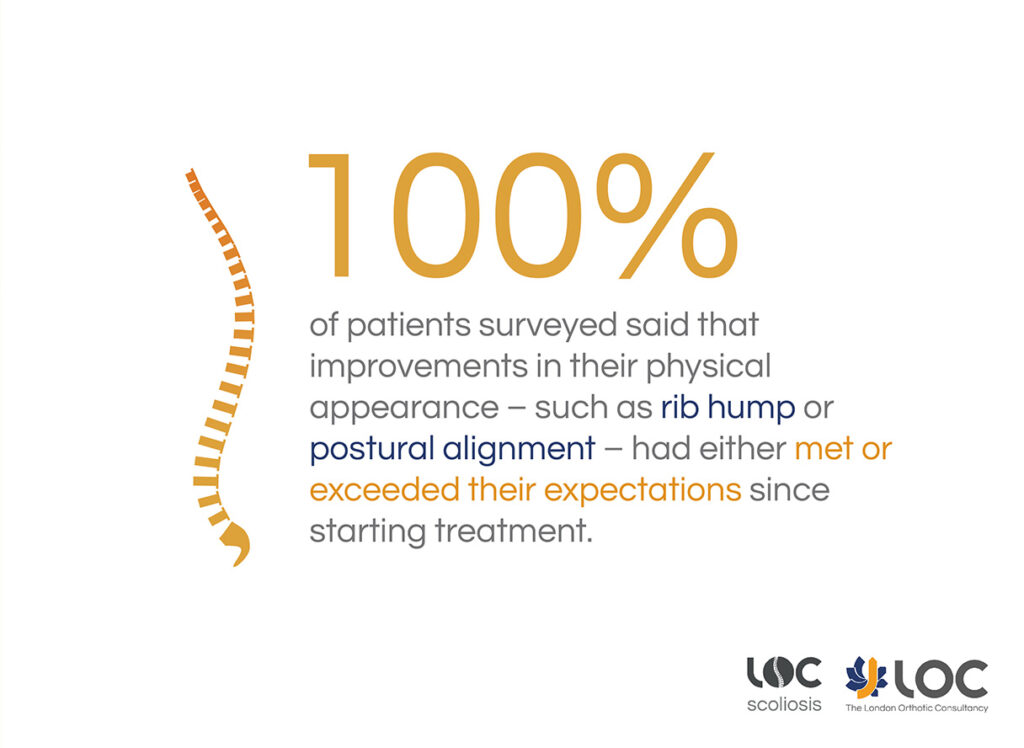
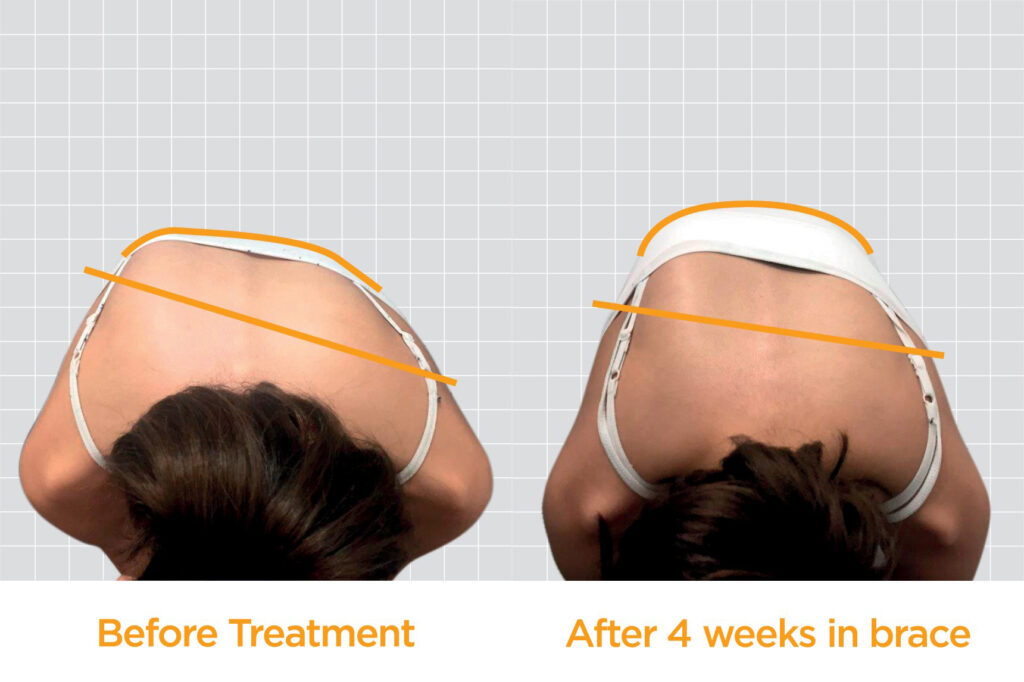
Again, 100% of patients surveyed said that improvements in their physical appearance – such as rib hump or postural alignment – had either met or exceeded their expectations since starting treatment. 100% of patients surveyed said that improvements in their Cobb angle had either met or exceeded their expectations since starting treatment.
If you would like to book an appointment with a scoliosis clinician, call our clinic on 020 8974 9989.
-
The operation used to treat severe scoliosis curves is typically spinal fusion surgery; a major procedure that involves moving muscles and realigning the skeleton into place. The curved, deformed vertebrae are fused together into a single bone, putting metal screws and rods into the spine to help straighten it. Surgery typically lasts between 4 and 8 hours depending on the severity of the curve. Bone graft is then taken from other parts of the body and used to cover the implants.
-
Following the operation, it is necessary to spend around a week in intensive care before returning home and the first few days are often uncomfortable. Most adolescents can expect to return to school from 2-4 weeks following surgery, but pain medication may be required up to 6 weeks following. A full recovery from the procedure can take up to a year, as it can take that long for the spine to heal fully. Spinal fusion surgery causes the fused portion of the back to become permanently stiff, as a result, returning to sports that require large amounts of flexibility (ballet, yoga, gymnastics, dance) or contact (rugby, football, karate, hockey) may take longer.
-
Risks of spinal fusion surgery are like that of any other major procedure and include infection, blood clots and anaesthesia complications. The added risks include permanent nerve damage to the spine and paralysis.