
We’re happy to answer any questions you might have, with no commitment to proceed with treatment.
Scoliosis
Scoliosis affects around 3 to 4 children in every 1,000. It can affect people at any age but is most typically seen in children between the ages of 10 and 15. It is more common in girls than boys.
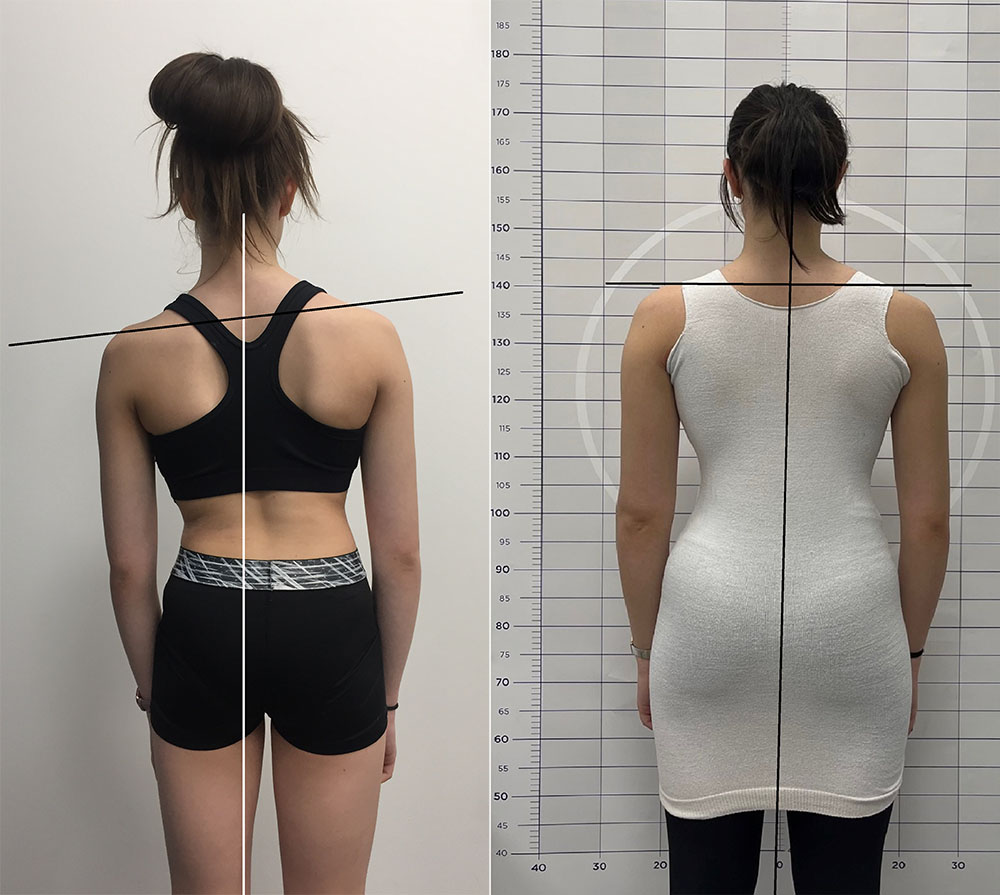
What is scoliosis?
Scoliosis is a spinal deformity that causes the spine to twist and curve sideways, often in the shape of an ‘S’ or a ‘C’.
The visual signs of scoliosis
- visibly curved spine
- leaning to one side
- shoulders look uneven (one looks higher than the other)
- uneven waist (one side looks higher than the other)
- head doesn’t look centred over the body
- rib cage create a hump that’s visible when bending over
- rounded shoulders, particularly on one side
- clothes that don’t fit well, for example an uneven or asymmetric skirt length
Other symptoms
- stiffness
- back pain (more common in adults)
- pins and needles in the legs caused by pressure on the nerves
Types of scoliosis
Scoliosis is classified by age. These are the three main types:
- Early onset scoliosis (EOS): Diagnosed in children under the age of 10
- Adolescent idiopathic scoliosis (AIS): Diagnosed between the ages of 10 and 18, or from the start of puberty until skeletal maturity
- Adult scoliosis: Diagnosed in adults after age 18, when skeletal growth is complete
Early onset and adolescent scoliosis are often described as idiopathic, meaning there is no known cause.

Scoliosis by age
Scoliosis in children and teenagers
Children with early onset scoliosis are generally at high risk of their curve worsening. Most will require active treatment with scoliosis bracing.
Adolescent idiopathic scoliosis (AIS) is the most common form and accounts for over 80% of scoliosis cases in children and teenagers. It affects both girls and boys from the age of 10 onwards until they reach skeletal maturity i.e. until they’ve stopped growing.
Adolescent scoliosis can progress quickly during growth spurts and hormonal changes.
Scoliosis in adults
Adult scoliosis can be idiopathic (without a specific cause) or degenerative (caused by the spinal discs and joints wearing down with age). It’s possible to experience both at the same time.
Risk factors for developing scoliosis in later life
Factors that can make it more likely for you to develop scoliosis as an adult, or for your scoliosis to get worse, include:
- being less mobile
- lack of regular extension activities
- hormonal changes post-pregnancy and menopause
- carrying heavy bags
- underlying medical conditions, like rheumatoid arthritis and osteoporosis
- desk work and seated activities
Non-idiopathic scoliosis
Non-idiopathic scoliosis is scoliosis that’s caused by another medical condition. It can also be referred to as ‘symptomatic’ or ‘syndromic’ scoliosis.
Kyphosis
Kyphosis is a curvature of the spine that causes the top of the back to look more rounded than usual. This results in a rounded or “hunched” appearance. It can occur at any age but is most commonly seen in older adults due to degenerative changes in the spine or in adolescents as part of a developmental issue.

Diagnosis
If you think you or your child has scoliosis, a GP will be able to refer you to a specialist.
An X-ray of your back will be carried out to check how big the curve is. If a specialist diagnoses you with scoliosis, they will discuss treatment options with you.
The Cobb angle
The Cobb angle measures the size of a spinal curve. It is used to assess the severity of your scoliosis.
- normal range: 0 to 10 degrees
- mild scoliosis: 10 to 20 degrees
- moderate: 20 to 40 degrees
- severe: more than 40 degrees
Scoliosis treatment
The severity of your scoliosis curve is the main factor in determining the type of treatment you will need.
Bracing treatment is very effective for treating mild to moderate forms of scoliosis. Bespoke braces can also:
- stop severe curves from getting worse
- prevent the need for scoliosis surgery in later life
- improve spinal flexibility before spinal surgery
- prevent your curve from getting worse before spinal surgery
Some severe scoliosis curves may still require surgery.
See our scoliosis treatment page
Prevent scoliosis surgery with our bespoke bracing treatment
A bespoke brace can stop the progression of scoliosis and prevent the need for surgery in later life. LOC’s scoliosis brace works by gently and progressively guiding your spine into a more corrective position.
The LOC Scoliosis Brace is the most corrective scoliosis brace in the UK, with clinical findings showing an average in-brace correction of 85% when worn as prescribed.

“LOC has been fantastic, friendly, understanding. Anna did not pull any punches about the wearing regime and gave us all the information we needed. Polly was in her brace for less than two years. LOC has provided a really incredible service.”
Zoe, Polly’s mother – Scoliosis patient (adolescent)