

We’re happy to answer any questions you might have, with no commitment to proceed with treatment.
Little Scarlett’s AFOs
AFOs improve stability and independence for little Scarlett
- Patient name: Scarletts
- Treatment: Brain injury treatment
- Age: 22 months
- Travelled from: United Kingdom
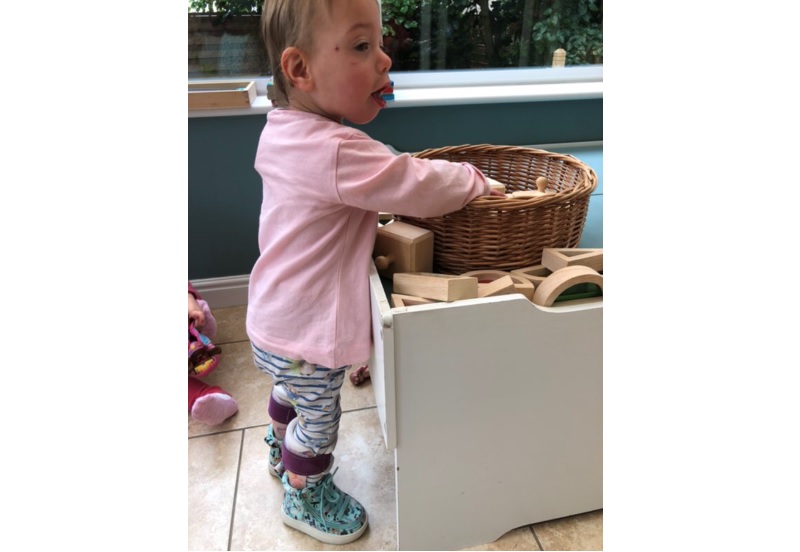
Born at just 31 weeks, having been diagnosed with Twin to Twin Transfusion Syndrome in the womb, little Scarlett is fondly referred to by her mum, Amy, as the family’s “little miracle”. “My pregnancy with Scarlett and her twin sister was a really difficult time,” Amy recalls. “Scarlett was treated as being in palliative care in the womb, and we were advised that she might be born in a vegetative state.”
Happily, Scarlett defied the odds and is now 22 months old, but the gestational condition has resulted in ongoing complications. TTTS is a condition that occurs when twins or other multiple siblings share the same placenta what is known as a monochronic pregnancy. This can cause an imbalance in the exchange of blood supply between twins, which can cause a number of complications due to a lack of oxygen and nourishment reaching the ‘donor twin’.
In little Scarlett’s case, the condition has resulted in periventricular leukomalacia or PVL. PVL is a type of brain injury that occurs when the white matter surrounding the ventricles of the brain is deprived of blood and oxygen. This affects the body’s ability to transmit messages from the nerve cells in the brain, in turn affecting the body’s ability to control its movements. For Scarlett, this manifests as a significant weakness on the left-hand side of her body, meaning that she is unable to stand without lower limb orthotic support.
“Scarlett originally had a set of splints from the NHS, but she quickly outgrew them,” Amy says. “Unfortunately, the second set we received was not accurately fitted and simply didn’t give her the support she needed. We noticed that she was actually getting weaker on her feet. She receives Conductive Education (a learning method that helps neurologically impaired patients learn to consciously perform actions that children would typically learn naturally). Her conductive educator recommended that we take her to see John (John Turner, Orthotist at LOC’s Manchester Clinic), to see if he could find a better solution.”
John’s priority for Scarlett was to focus on providing a set of custom-made Ankle Foot Orthotics (AFOs) for maximum stability below the knee. “It was important to make Scarlett a set of splints with the correct angle that addresses the tightness in her Achilles tendon,” he explains. “I also focused on bringing the AFOs around the foot so that they hold the foot at the right angle, to improve and strengthen Scarlett’s posture.”
Related Video
Improved lower limb stability and strength with the right AFO solution
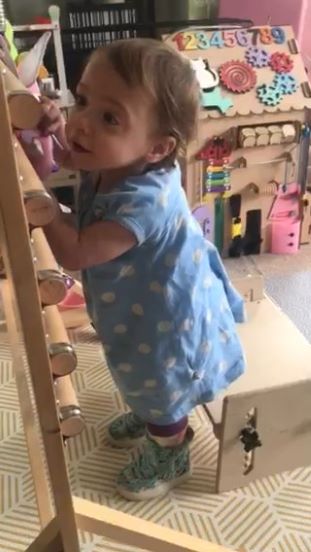
The effect when Scarlett first tried her new AFOs, Amy says, was instantly encouraging. “John has made an amazing pair of splints for her, and she loves being in them. We have noticed such a difference! She is now able to stand independently for a couple of seconds, whereas before she had to grasp things to hold herself up. She is starting to play while standing and to stand up in her cot so that she can chat with her twin sister. Both her private and NHS physiotherapists have been amazed at how much more confident she is in her new orthotics.”
As well as designing the AFOs that LOC cast and manufacture in-house, John also paid attention to Scarlett’s footwear to maximise her splints’ impact. “Scarlett has a pair of Billy Shoes, which have a zipper that allows the ‘Vamp’ of the shoe (the part of the shoe that covers the upper foot) to open fully. That’s a really big help to an orthotist, as it allows the shoe to open and close around the AFO. I added wedging to Scarlett’s shoes to ensure that the foot is consistently held at the optimum angle, giving her more support and balance. When you are manufacturing a lower limb orthotic, it’s really important to think holistically about how the shoe and the splint coordinate together to ensure that the orthotic really meets the needs of that individual child.”
Tailor-made paediatric orthotics manufactured in-house
Amy says that she is impressed by the thorough and careful approach John took to Scarlett’s treatment. “He was so knowledgeable; he gave us all the time we needed. He studied everything carefully and came up with a really detailed plan. He took photographs so that he could show me a before and after view of the impact on her balance. He gives you so much time; he never makes you feel like he’s in a rush. The aftercare is fantastic, as well. I always feel welcome to contact John with a question or just to let him know how Scarlett is doing, and he always gets back to me. Plus, it was fantastic that we could have the AFOs cast there and then. All we had to do was come back once to have the splints fitted. It made life so much easier.”
-
We have the following facilities and amenities at our Kingston Upon Thames location: We also have the Gait Laboratory for orthotics patients and Onsite Manufacturing for speedy turnarounds and adjustments whilst you wait.
-
We have the following facilities and amenities at our Cambridge location:
-
We have the following facilities and amenities at our Bristol location: For more information, visit Litfield House Medical Centre.
-
We have the following facilities and amenities at our Romford location: Parking: There is NO parking directly outside the clinic. These spaces are reserved for residents. The nearest parking can be found at Billet Lane public pay & display opposite Queens Theatre, a 2-minute walk from the clinic. Click here for more information about Best Health Clinic
-
LOC’s clinic is based in the University of Salford’s Podiatry Department and provides treatments for orthotics, scoliosis, pectus deformities, positional plagiocephaly and club foot. It is also the base for LOC’s northern OSKAR clinic which is run by Sam Walmsley, clinical director of LOC, in conjunction with Elaine Owen MBE MSc SRP MCSP.
-
Due to COVID-19, we have had to temporarily close the Salford clinic and are operating out of another clinic in Bolton. 508 Blackburn Rd, Astley Bridge, Bolton BL1 8NW For more information, please visit The Good Health Centre