

We’re happy to answer any questions you might have, with no commitment to proceed with treatment.
Charlie’s pectus excavatum responds quickly to vacuum bell treatment
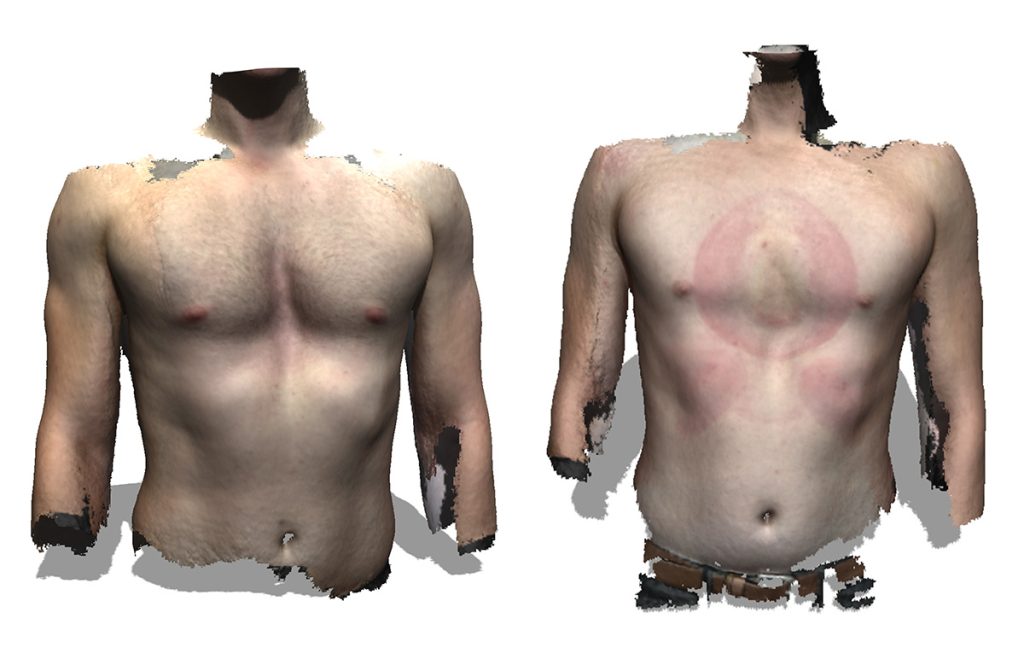
Vacuum bell therapy and custom rib bracing helped Charlie’s pectus excavatum chest shape, reducing his sternum indentation from 40mm to 10mm.
- Patient name: Charlie
- Treatment: Pectus excavatum treatment
- Age: 31
- Orthotist: Connor Mumford
- Travelled from: United Kingdom

Pectus excavatum (PE), also known as “funnel chest” or “sunken chest,” is a chest wall deformity where the breastbone (sternum) is sunken inwards, giving the chest a caved-in or hollow appearance.
It occurs when the cartilage connecting the ribs to the sternum grows abnormally, causing the sternum to move inward. Pectus excavatum is sometimes present at birth and may worsen during puberty as the chest grows. It’s believed to have a genetic component, as it can run in families. It is more common in boys than girls.
Charlie was aware of the condition because family members had it. They were treated surgically (with the Nuss procedure) on the NHS but by the time Charlie was considering treatment, surgery was not an option where he lived.
Charlie searched the internet and found the London Orthotic Consultancy. He remarks: “LOC’s website about their non-surgical treatment for PE was frankly the only one that made sense and as I didn’t live far from Kingston that was the clincher.” Charlie was assessed by Connor Mumford, one of LOC’s specialist pectus clinicians, in October 2022.
Charlie says: “I’d done a fair amount of reading before coming in for that initial consultation, I knew that the optimum age for non-surgical treatment were the teenage years and that as an adult (Charlie is 31), there needed to be some flexibility in my chest wall for treatment to work.
Connor tested my chest with the vacuum bell and it was immediately clear that my chest was responsive. Connor told me that my chest depression measured 40mm and that he was confident that using the vacuum bell device in combination with specific breathing exercises would result in a 50% correction if not more.”
Sam Walmsley talks through the features of our slimline pectus brace
The vacuum bell is a non-surgical device used to treat pectus excavatum by helping to lift the sunken chest wall. It works by creating a vacuum over the chest, which gradually pulls the sternum outward over time. Charlie also had some rib flaring, this is often associated with pectus excavatum, as the chest goes in, the ribs go out. Charlie was committed to sorting his chest shape out and opted for the combined treatment of the vacuum bell and rib brace.
In fact, Charlie was surprised by how easy he found the vacuum bell to wear. “I didn’t find it invasive, and with a jumper on, nobody would know that I was wearing it”. Because of this, he quickly got into a routine of wearing it for 16 hours a day. The rib brace was less easy to get used to, particularly as the wearing regime requires sleeping in the brace, but Charlie persevered.
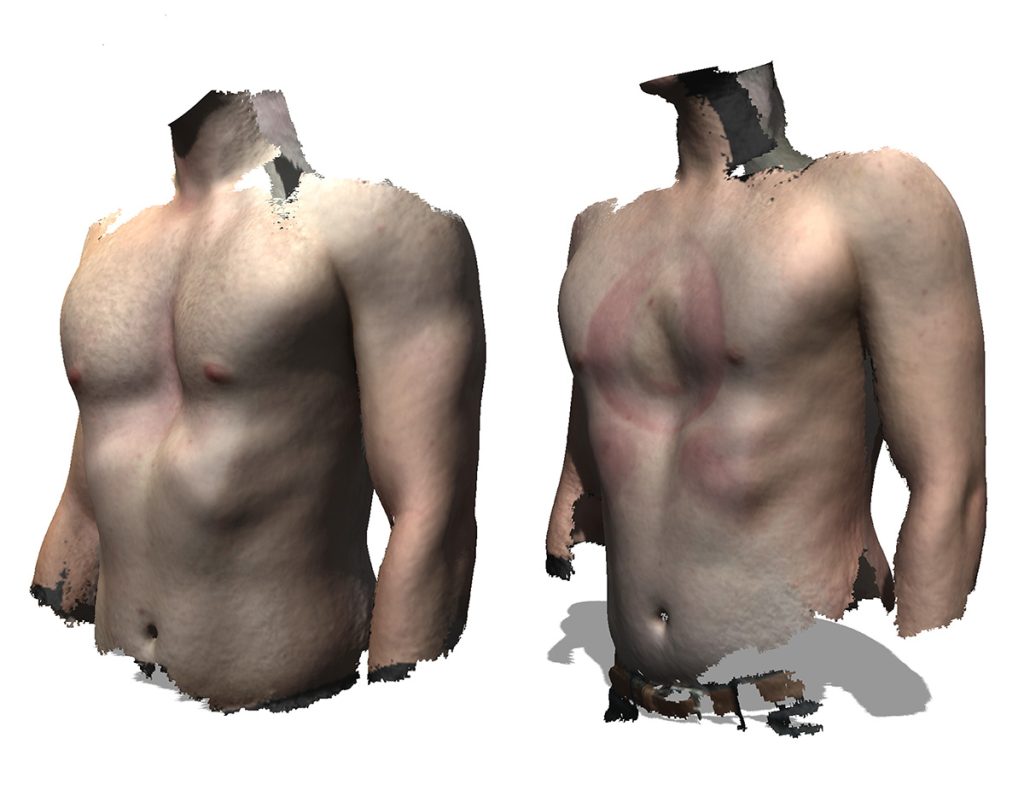
The scans demonstrate the difference treatment has made to Charlie’s pectus excavatum chest shape, reducing his indentation from 40mm to 10mm.
Charlie says: “I would give 10/10 to Connor for his straightforward approach and helpfulness throughout my period of treatment. He didn’t over-promise and was completely up-front about what I had to put into the treatment programme in terms of the wearing regime and exercises. I’m very pleased with the improvement in appearance of my chest.”
If you or your child is concerned about their chest shape, book a free online pectus appointment with one of our clinicians today.