

We’re happy to answer any questions you might have, with no commitment to proceed with treatment.
Drop foot patient Iain treated with carbon fibre AFO
We designed a bespoke carbon fibre Ankle Foot Orthosis for Iain after a historic motorcycle accident left him with damage to his anterior tibial muscle.
- Patient name: Iain
- Treatment: Drop foot treatment
- Travelled from: United Kingdom
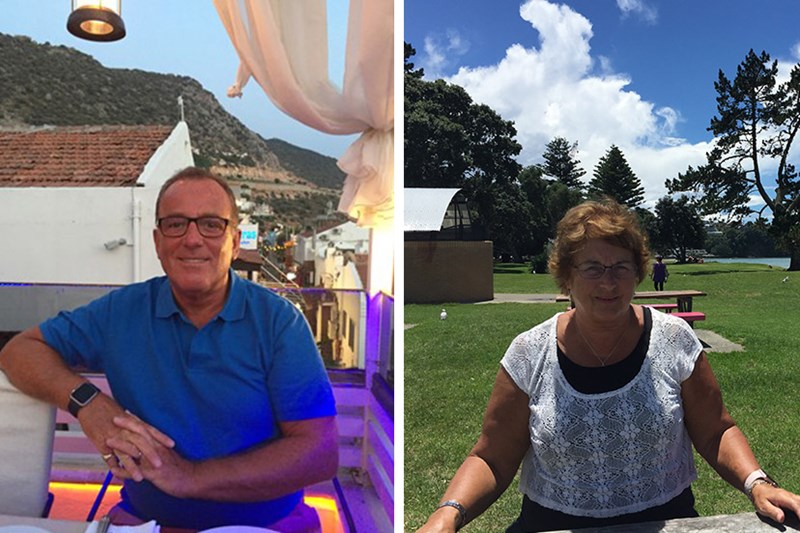
We caught up with Iain Carmichael, a recent LOC patient, who is undergoing the mammoth challenge of a 26-mile marathon walk, the Thames Path Mighty Hike for Macmillan Cancer Support with his wife Linda. Completing the route, from Windsor to Henley, would be a feat for most, but for Iain and his bespoke orthosis – the challenge is certainly worth it for such an important cause so close to his heart.
Over 40 years ago, Iain suffered a bad motorcycle accident whilst enjoying a holiday in Greece. He emerged with a dislocated left knee, damage to his cruciate ligaments and medial meniscus tears, which would eventually repair, but “the killer” as Iain puts it, was the damage to his anterior tibial muscle nerve, i.e. the nerve that runs down the side of your lower leg. This nerve is responsible for lifting your ankle and toes upwards, or dorsiflexion.
“It was incredibly incapacitating, I was in plaster for three months. It was the nerve damage that was the worst because bones and ligaments you can repair, but the nerve caused my foot to drop because it never recovered.”
‘Foot Drop’ – also called ‘drop foot’ – is a gait abnormality caused by damage or weakening of the leg nerves and muscles, which can be temporary or permanent depending on its root cause. Drop foot sufferers will often walk with their raised leg bent at the knee to compensate for the forefront of the foot ‘dropping’ and dragging along the floor. Not considered a disease itself, it is often a symptom of another condition; muscular dystrophy, MS, cerebral palsy and Charcot Marie Tooth all list drop foot as a potential symptom.
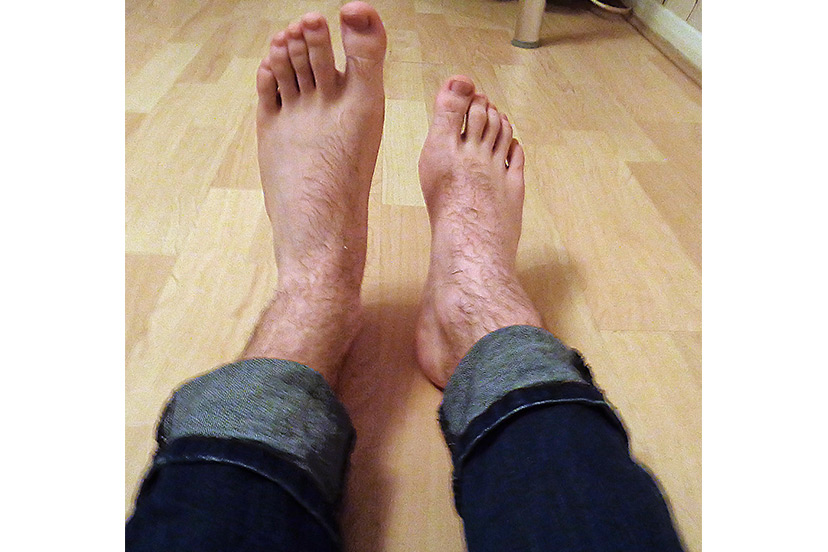
The main risk factors associated with drop foot involve tripping and falling, shoes may scuff more frequently and walking itself can be incredibly tiring. Sufferers often have to concentrate very hard, with their head craned towards the floor to make sure they do not lose their footing. These risks can become more worrying as a person ages, where fractures and further injury can happen more easily.
Iain says “I was given an NHS orthosis, which was horrendous – just a piece of plastic that my heel sat in, so it was incredibly painful to walk in. My heel would just rub against the hard plastic, so I didn’t fancy using it. I still managed to get by ok, wearing a thin fabric strap and then a Velcro one around my ankle.”
As he’s got older, Iain says “I’ve found that I’m more prone to tripping while walking. Normally, when you trip, you stagger to regain your balance, but when you have drop foot, you tend to fall flat on your face, so I was becoming more and more conscious of that, when I decided to have a look around and see what was available. That’s when I came across the London Orthotic Consultancy online.
From the time I made contact with LOC, I had my first appointment within a week. Alan said almost straight away that rather than going for an off-the-shelf orthosis, it was better to go for a custom made one. He took the mould that day and three weeks later I came back and had my carbon fibre helix AFO supplied and fitted, with only a minor trim and adjustment.”
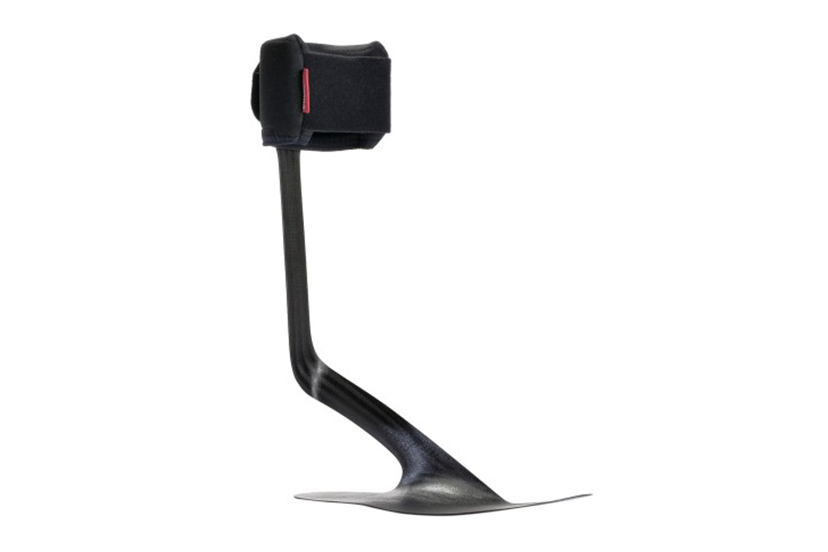
An Ankle Foot Orthosis (AFO) supports the ankle and foot, helping with dorsiflexion weakness, and is one of the most commonly prescribed orthoses.
“Now when I walk, I feel more confident that I’m not going to trip over or roll my ankle. Not even just when I’m training for the marathon, but walking down the street every day has significantly improved. It’s encouraged me to walk more, perhaps more than I would have done before.”
Iain
Drop foot means your gait—or walking pattern—looks very different to normal. One of the main benefits for Iain? He says, “I rate the boost in confidence aspect very highly. If I had to pick just one of the benefits, that would be it for me—I’m not aware of my walk or of looking like I’m walking in a strange way.”
He suggests he should have done it years ago and without the orthosis, the challenge may not have been possible; “I was doing 21-minute miles or so beforehand, and now with my AFO I’m doing about 19-minute miles, so it’s certainly enabled me to speed up. With two minutes shaved off every mile—that really adds up over the 26 miles—it means I can finish in the same day rather than the next!
“My niece’s husband sadly died from cancer on the 10th of June last year, and this walk is on the 9th of June this year—364 days since he passed away. He and his wife received wonderful support from Macmillan, and we just thought it was a fitting way to remember him and raise money for a great cause. Hopefully, we’ll both drag each other across the line towards the end!”