

We’re happy to answer any questions you might have, with no commitment to proceed with treatment.
Beau’s Scoliosis story
Beau’s fantastic attitude makes all the difference to the success of her scoliosis treatment
- Patient name: Beau
- Treatment: Scoliosis treatment
- Travelled from: United Kingdom
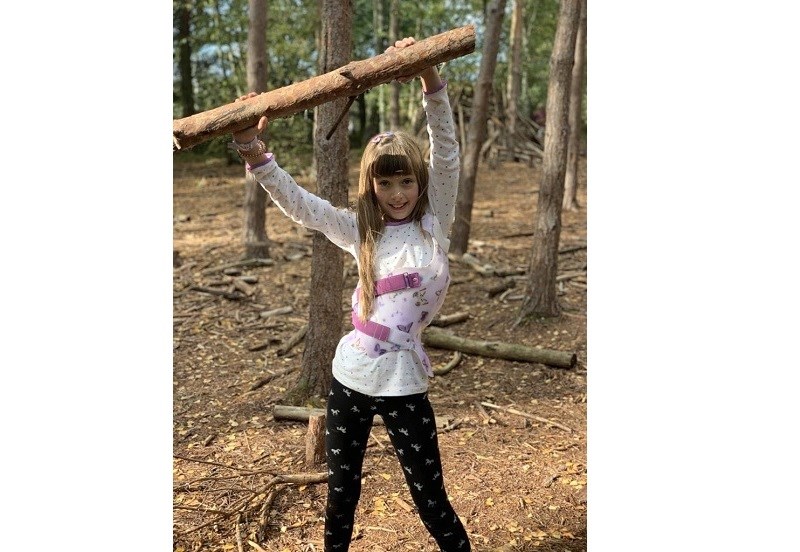
LOC recently heard from one of our young patients, Beau, who was diagnosed in 2020 with juvenile idiopathic scoliosis. As the Scoliosis Association UK confirms, the term ‘idiopathic’ means that there is no known cause for the condition. The good news, though, is that plenty can be done to improve the curvature of the spine in young people. And, with the right treatment package, surgery can be avoided whilst still achieving great results.
Beau has embraced her treatment programme wholeheartedly. Her positive outlook and ‘can-do’ attitude are inspiring. In fact, she is so thrilled with her results that she wants to be a LOC poster girl for scoliosis bracing, to encourage other young people in her situation to seek similar help. As she so maturely says:
“If you say something is going to be easy it will be easy and if you say something will be hard it will be hard. So, I’m just going to say that wearing my brace is easy. And as it turns out, it really is.”
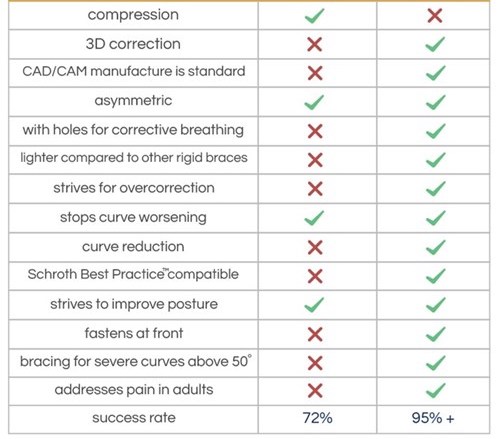
When Beau first attended our Kingston upon Thames clinic, she presented with a thoracic Cobb angle of 43°, which meant she had nearly reached the threshold where surgery is recommended. Our orthotist, assessed Beau’s spinal curvature and prescribed her a bespoke Cheneau-Gensingen brace – our preferred treatment for scoliosis as it provides three-dimensional, gently corrective pressure that is proven to be highly effective at reducing Cobb angles.
The role of physiotherapy in treating scoliosis
Cheneau-Gensingen bracing is usually combined with a course of Schroth physiotherapy for the most effective results. This involves a commitment from the patient to perform their exercises regularly. Our physiotherapy treatment for scoliosis is designed on a bespoke basis for each patient, with curve-pattern specific exercises that utilise gravity to improve and maintain spinal alignment through over-correction.
At her latest review, we were delighted to observe in her latest in-brace X-rays that Beau’s posture continues to improve dramatically. We look forward to her next out of brace X-ray which we anticipate will confirm this fantastic progress!

Naturally, Beau’s mum, Jodie, is also thrilled with her progress and with the overall experience, her daughter has had at LOC. “LOC have helped remove the stress from our situation,” she recently told us. “They have given us hope based on their extensive knowledge and expertise.”
Are you concerned that your child may have scoliosis?
Especially in young people, spotting the early signs of scoliosis is important – as is seeking early treatment. These are the warning signs to look out for:

You can find out more about the visual signs of scoliosis here.
If you think your child, adolescent, or adult family member has scoliosis, you can contact LOC directly to arrange a consultation at one of our scoliosis clinics.
-
The operation used to treat severe scoliosis curves is typically spinal fusion surgery; a major procedure that involves moving muscles and realigning the skeleton into place. The curved, deformed vertebrae are fused together into a single bone, putting metal screws and rods into the spine to help straighten it. Surgery typically lasts between 4 and 8 hours depending on the severity of the curve. Bone graft is then taken from other parts of the body and used to cover the implants.
-
Following the operation, it is necessary to spend around a week in intensive care before returning home and the first few days are often uncomfortable. Most adolescents can expect to return to school from 2-4 weeks following surgery, but pain medication may be required up to 6 weeks following. A full recovery from the procedure can take up to a year, as it can take that long for the spine to heal fully. Spinal fusion surgery causes the fused portion of the back to become permanently stiff, as a result, returning to sports that require large amounts of flexibility (ballet, yoga, gymnastics, dance) or contact (rugby, football, karate, hockey) may take longer.
-
Risks of spinal fusion surgery are like that of any other major procedure and include infection, blood clots and anaesthesia complications. The added risks include permanent nerve damage to the spine and paralysis.