

We’re happy to answer any questions you might have, with no commitment to proceed with treatment.
How we use gait lab technology to fine-tune our orthotics
Video vector gait lab analysis helps us assess walking patterns before and after any lower-limb orthotic fitting.

What is a gait lab?
A gait laboratory is a high-tech facility used to analyse how people walk and identify mobility issues.
Also known as a video vector gait laboratory or motion analysis laboratory, they are equipped with cameras, force plates, and measurement tools that provide data on joint movement, muscle activity, and walking forces. This helps pinpoint any problems caused by muscle, nerve, or skeletal conditions and guides treatment with orthotics.
Spinal injury patient Quentin in the gait lab
How the gait lab works
A video vector gait laboratory has several components:
- Force plates, which are highly sensitive measurement devices that calculate the amount of force applied during walking.
- Sophisticated 3D cameras that synchronise with the force measurement plates set within the floor.
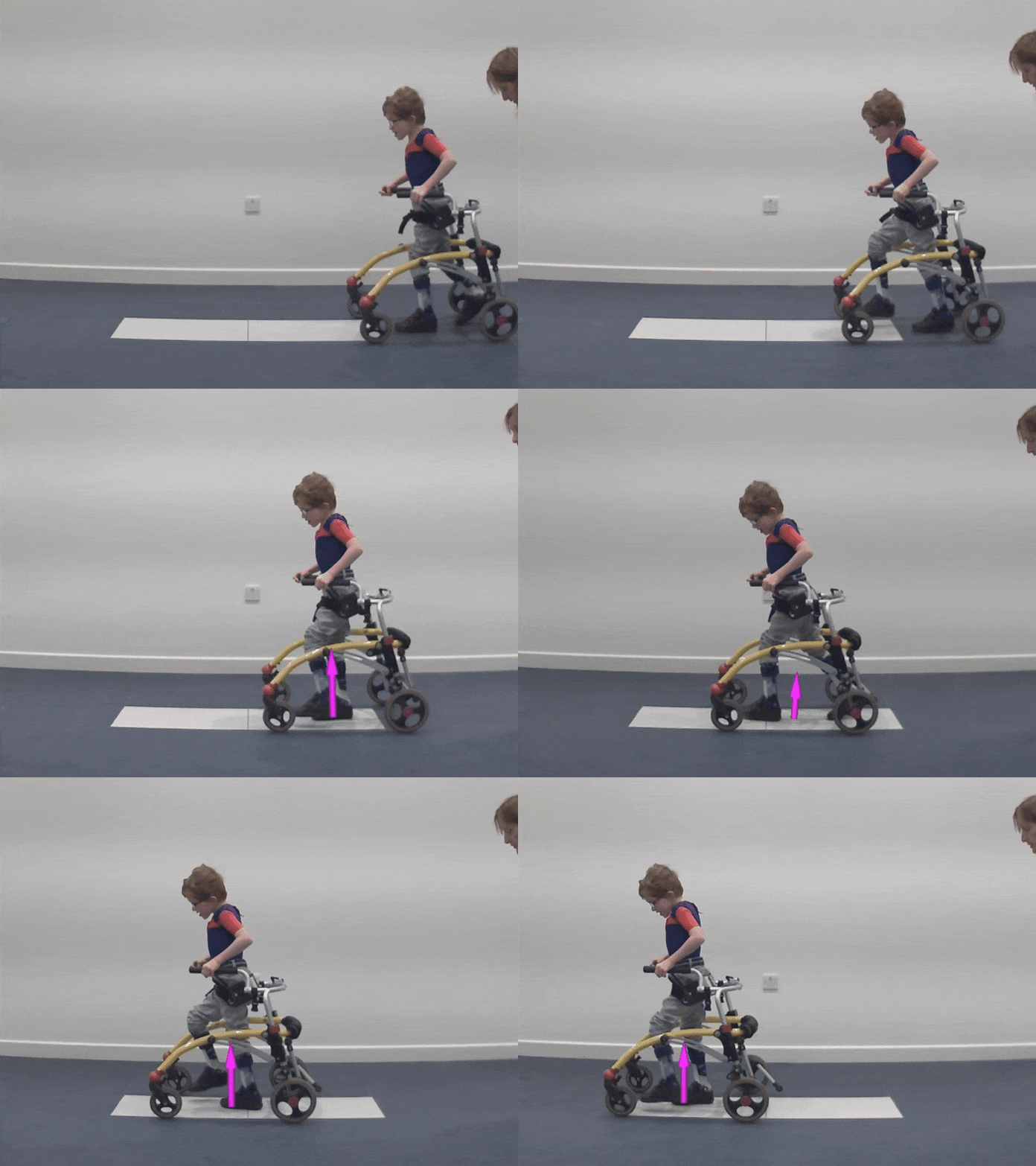
Gait labs like ours measure force in three planes; sagittal, coronal and transverse. The technology creates a vector or graphical representation of this force which is then projected on to the camera footage of the person walking.
The result is that our clinicians can accurately see where the vector is located. In particular, its direction and where it is in relation to the joints in the stance leg. Understanding where the force is positioned in relation to the leg is essential for accurate fine-tuning of the lower limb orthotics that we prescribe.
For example, if the vector is positioned too far in front of the knee at late mid-stance, there will be a hyperextension force applied to the knee.
The aim of our work within the gait laboratory is to produce orthotic prescriptions that are designed to:
- protect the bones and joints of the lower leg
- maintain the range of movement of the hip, knee and ankle
- return the gait to as typical a gait pattern as possible.
Gait labs are particularly useful for people with movement disorders caused by neurological conditions like:
- cerebral palsy
- spina bifida
- drop foot
- Parkinson’s disease
They also benefit those recovering from brain injuries, strokes, or SDR surgery.
Benefits for patients
Gait analysis laboratories can significantly improve the assessment, production and fitting of orthotics by offering:
1. Real-time feedback
Getting real-time feedback during walking or other activities can help clinicians and orthotists evaluate the effectiveness of the orthotics prescribed and make adjustments as required immediately.
2. Precise measurements
Incredibly precise measurements of joint angles, muscle activity and ground reaction forces means we can create orthotics that fit and function optimally.
3. Objective data and reporting
Gait laboratory data is objective (unlike human bias) which can help identify specific areas of weakness or dysfunction and track progress over time.
4. Individualised treatment plans
No two patients are the same, so when it comes to orthotics, it’s not a case of one-size-fits-all. Gait lab data can help our orthotists create even more bespoke treatment plans for patients, based on their specific gait patterns and their individual goals.
5. Better clinical outcomes
Detailed information and feedback from gait laboratories mean better and more effective orthotics, leading to better outcomes for patients.
Our gait lab locations
We have gait labs in the following locations: