

We’re happy to answer any questions you might have, with no commitment to proceed with treatment.
Tummy time guide
Tummy time is a simple yet effective way to help your baby strengthen their neck, shoulders, and core muscles.

What is tummy time?
Tummy time is when you place your baby on their stomach while they are awake and under supervision.
Why is tummy time important?
For their development
This position is very important to encourage normal motor development (ie rolling, crawling, sitting etc). Babies need time lying on their tummies daily to help develop head and neck control, strength and stability. This builds a foundation for later developmental milestones.
In this position, a baby learns to take weight through its arms, push up and move its weight from side to side, which helps a baby to reach and crawl. Tummy time also helps develop balance and coordination skills, increases body awareness and, as a baby gets stronger, provides an excellent environment for a baby to learn and explore its surroundings.
To prevent positional plagiocephaly
Because tummy time relieves pressure from the back of a baby’s head, it is an excellent position to prevent head flattening and positional plagiocephaly. This is also a great position for strengthening their head and neck muscles.
The muscles that extend the neck and keep the head up against gravity are attached at the base of the skull at the back. When a baby is on its tummy, these muscles are contracting and working hard to keep the head up. The pull of these muscles on the lower skull, can help to round out the lower part of the back of the head (occipital area).
How to do tummy time with your baby
Tummy time should always be supervised and is best done when your baby is awake and alert.
See how long your baby can stay on its tummy and try and progress this by a minute every 3 to 4 days.
This is the best way to increase its tolerance of tummy time. Your baby will probably cry towards the end of each period of time as this is when they will get tired. Tummy time is hard work and it’s natural for a baby to get frustrated when it gets tired. However, it’s important to try to keep your baby on its tummy for the extra time; otherwise, your baby will not build up its strength and will also quickly learn that crying means being picked up.
Ideally you should eventually be aiming for about 20 to 30 minutes of supervised tummy time at any one time.
Build this up gradually and try to have some tummy time 2 to 3 times a day. Shorter periods should be carried out 5 to 6 times a day.
Tummy time ideas
Here are some ideas to make tummy time easier and fun for both you and your baby.
Up to 2 months:
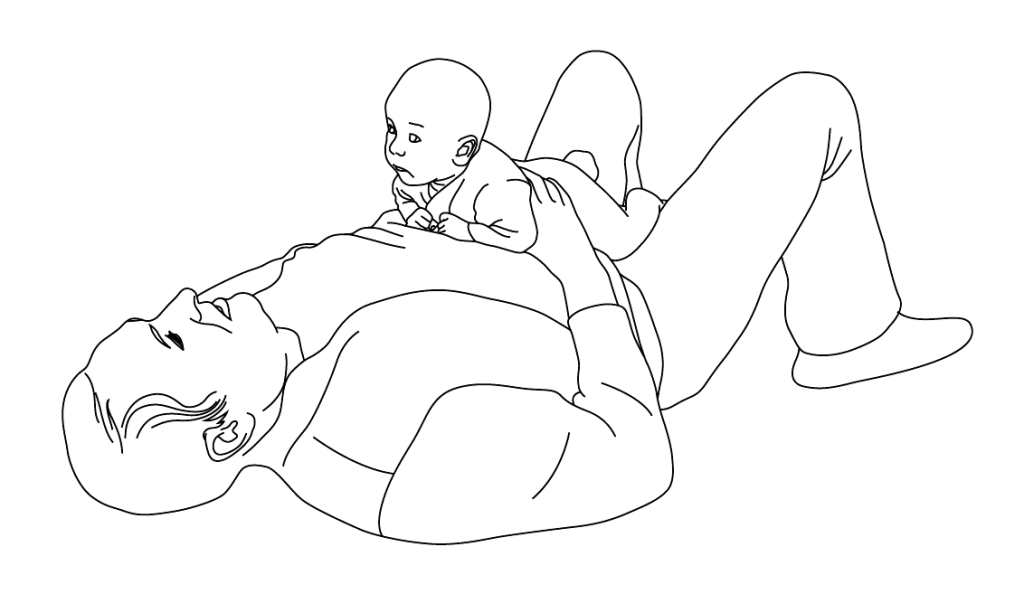
- A great way to introduce tummy time is by having your baby on your chest while you lie back on the sofa or floor. Eye and body contact help reassure the baby and make tummy time comforting.

- Place your baby on the floor with plenty of toys and distractions. Mirrors are great for getting a baby’s attention and encouraging head lifting. Always make sure your baby is taking some weight through its forearms.

- If at first your baby finds it hard to lift its head, place a rolled-up towel under its chest for support. As the baby gets stronger, remove the towel to increase difficulty.
- Use toys, mirrors, bubbles, and lights to encourage looking up and from side to side.

- Place your baby over your knees with its head unsupported to encourage head lifting and looking around.
Up to 5 months:

- As your baby gets stronger, it will take more weight through its arms and start pushing up. Use toys and distractions to encourage this.
- Once the baby masters propping on its forearms, they will begin pushing up onto extended arms to reach and play.
- Using colorful toys, encourage reaching forward, left, and right. This promotes weight shifting, which is essential for crawling.
Up to 6 months:
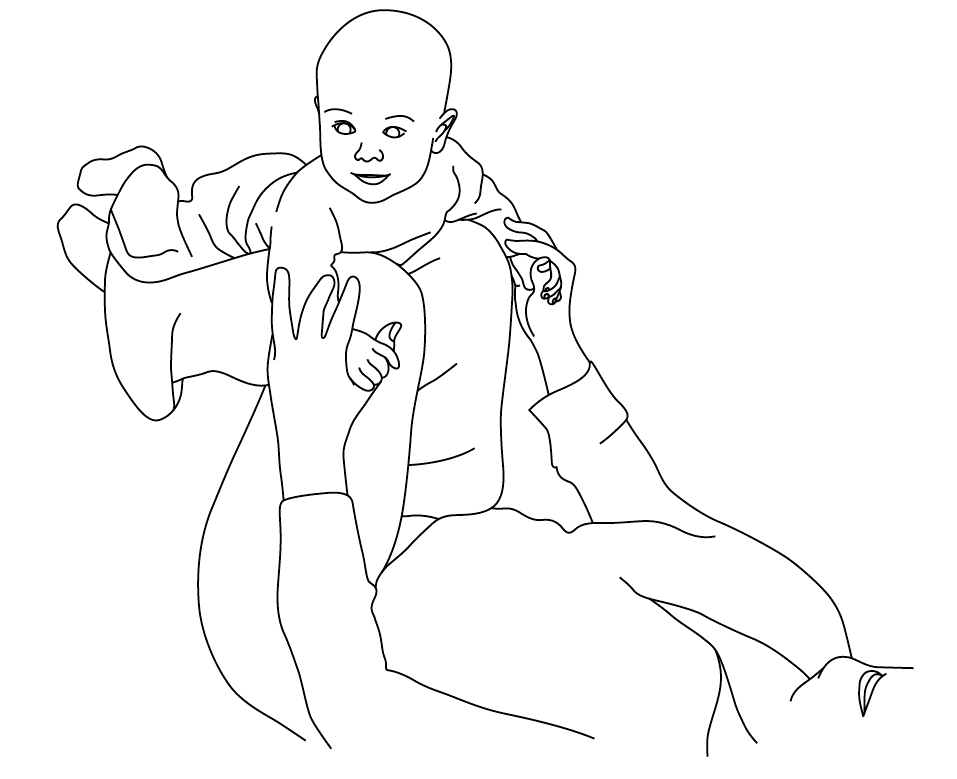
- Lie on your back and place your baby on your bent legs, facing you. Holding their hands, gently lift and lower your legs to engage them.
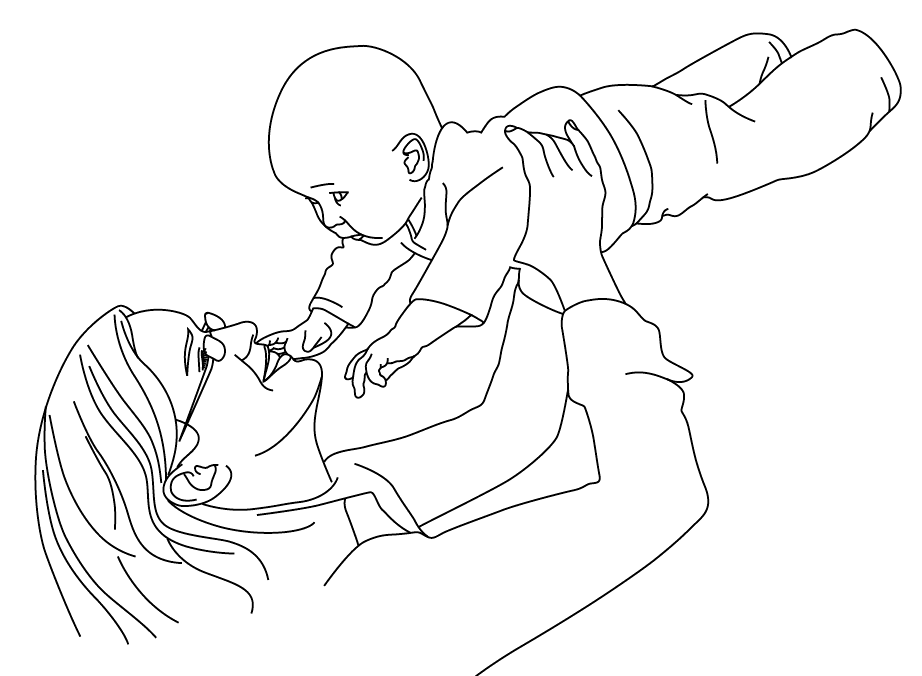
- Hold your baby under their tummy or around their waist and play ‘Superman’ by flying them through the air to encourage head and body extension.
- As your baby gets stronger, weight-shifting activities will become easier. Support their hips and encourage forward and sideways weight transference. Progress by bringing their knees underneath their hips to transition into a four-point kneeling or crawling position. This helps strengthen their hips and prepares them for crawling.