
We’re happy to answer any questions you might have, with no commitment to proceed with treatment.
-
Costs vary depending on whether one or both legs require bracing. Please refer to our pricing page for detailed information.
-
Older children can still benefit from treatment. We may adjust the plan slightly, but the process remains effective even if started later.
-
Treatment typically begins after birth, following the Ponseti method. We start with the Cunningham Brace after your child has completed this initial phase.
-
The brace should be cleaned regularly with mild soap and water. Avoid using harsh chemicals or submerging it in water. Your orthotist can provide specific care instructions during your appointment.
-
Most children need two to three braces throughout the two-year treatment period, with adjustments made as they grow.
-
Treatment usually takes about two years:
• Year one: The brace is worn for 23 hours a day
• Year two: As your child begins standing and walking, it’s worn during sleep -
We usually see patients monthly to monitor progress, but this can vary depending on your child’s needs.
-
Yes, the Cunningham Brace is custom-fitted based on your child’s measurements. We can adapt in-stock braces to your child’s size, ensuring a proper fit.
-
At your first appointment, we’ll measure your child and fit their Cunningham Brace. We’ll also explain how to use it and arrange regular follow-ups to check progress and make adjustments.
-
- It’s more comfortable, as it’s worn on one leg and lets your child move freely.
- Reduces the risk of skin irritation compared to the boots and bar.
- Supports better muscle symmetry and natural development.
-
The Cunningham Brace, created by Jerald Cunningham, gently corrects the foot using a strap around the thigh and a spring under the foot. It allows your child to move naturally—crawling, standing, and playing—while encouraging muscle growth and symmetry.
-
After the Ponseti method, children wear special boots connected by a bar to keep the correction in place. This is worn full-time for the first three months, then during sleep until around age four or five. While it’s effective, some families find it challenging, which is why we also offer the Cunningham Brace.
-
The Ponseti method is the gold standard for treating club foot. It’s a step-by-step process involving gentle manipulation and weekly plaster casts for several weeks. Then, a minor procedure called a tenotomy is performed to lengthen the Achilles tendon. This method is recommended by many leading hospitals, including Great Ormond Street Hospital (GOSH).
-
At LOC, we primarily assist patients in the maintenance phase after they have undergone the Ponseti method. This involves a process known as ‘boots and bar’ treatment. We also offer an innovative alternative, the Cunningham Brace, which we are the only clinic in the UK and Europe to provide.
-
Look for a noticeable inward rotation of the foot at the ankle, with the sole facing backwards. If left untreated, individuals with club foot may appear to walk on their ankles or the sides of their feet.
-
Club foot, also known as congenital talipes equinovarus (CTEV), is a condition present at birth that affects one or both feet. It causes the foot to rotate internally at the ankle, pointing downwards and inwards. It is a relatively common condition, affecting about one in every 1,000 babies born in the UK.
-
The duration of treatment varies depending on the individual’s response to bracing and the severity of the condition. On average, treatment can take anywhere from six months to two years. Regular follow-ups are essential to monitor progress and make necessary adjustments.
-
For many patients, particularly those treated early, bracing can significantly improve chest wall deformities and may eliminate the need for surgical intervention. For older patients or those with severe deformities, bracing can still provide substantial improvement and may be recommended as part of a comprehensive treatment plan, sometimes alongside surgical options
-
Consistency is key for effective treatment. Not wearing the brace as prescribed can slow down progress or lead to regression of the correction achieved. It’s important to follow the clinician’s guidelines to get the best results.
-
The duration of daily wear varies depending on the severity of the condition and the stage of treatment. Typically, patients are advised to wear the brace for 16-23 hours a day in the initial stages. As treatment progresses and improvement is seen, the wearing time may be gradually reduced.
-
It’s normal to feel a little uncomfortable at first as your body adjusts to the brace. Most people find this goes away after the initial adjustment period. If you’re experiencing ongoing pain or irritation, let us know right away so we can make adjustments.
-
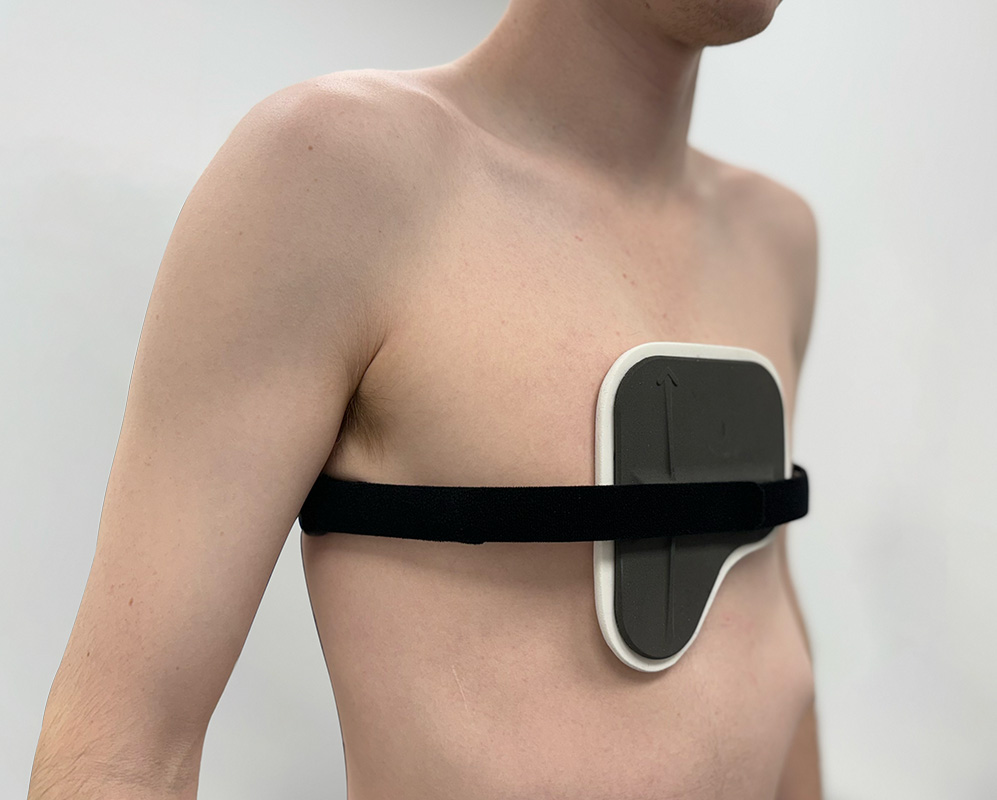
• Pectus excavatum: The chest wall sinks inwards, creating a “caved-in” look.
• Pectus carinatum: The chest wall sticks outwards, often called “pigeon chest.”
Both conditions are chest wall deformities that can be treated with orthotics. -
If you or your child are concerned about chest shape, schedule a free online consultation with one of our pectus specialists to discuss treatment options. We’re also happy to collaborate with local GPs, thoracic surgeons, and consultants for patients considering bracing after exploring other options.
-
Most patients only need one brace to achieve their desired correction, as each brace is designed to last the entire treatment and accommodate growth. However, some may benefit from two braces—one for the main deformity and another for rib flaring. For pectus excavatum patients, applying pressure to the ribs along with vacuum bell therapy can reduce the appearance of a depressed sternum, pushing it outward into a corrective position.