
We’re happy to answer any questions you might have, with no commitment to proceed with treatment.
Craniosynostosis
Craniosynostosis is when a baby’s skull fuses too early and does not grow properly, causing the head to become misshapen. It’s a rare condition that affects between 1 in 1,800 and 1 in 2,000 babies in the UK.
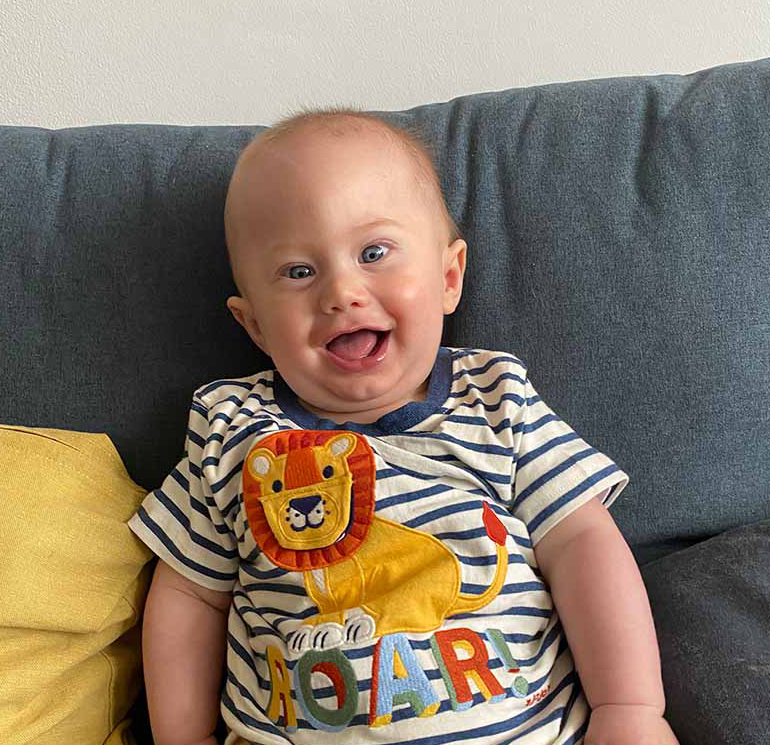
What is craniosynostosis?
Craniosynostosis is when the bones in your baby’s skull close too early, restricting brain development.
When your baby is born, their skull is made up of soft bony plates separated by gaps called sutures. These sutures eventually close to protect the brain as it grows. Normally, this happens between the ages of 20 and 24 months.
Craniosynostosis occurs when one or more of the sutures close too early, either before birth or after. This can stop the skull from growing properly, which can limit space for your baby’s brain to develop. It can also cause their head to look misshapen or uneven.
Early diagnosis and treatment are important to reduce the risk of brain damage.
Different types of craniosynostosis
There are different types of craniosynostosis, depending on which parts of the skull are affected. The three main types are:
- Sagittal craniosynostosis: The most common type, where the suture at the top of the skull closes too early, making the head long and narrow.
- Metopic craniosynostosis: The suture along the forehead closes too soon, creating a pointed or triangular forehead and closely-set eyes.
- Unicoronal craniosynostosis: One side of the forehead closes early, causing the face to look uneven, with one ear displaced and the nose pointing away from the flattened side.

Sagittal craniosynostosis
Here, the skull looks long and narrow, from the front to the back and from ear to ear, like a rugby ball. The forehead can stick out more than usual, and the back of the head may look more pronounced. You might feel a ridge along the top of your baby’s head.
Metopic craniosynostosis
When the middle of the forehead closes too early, causing the forehead to be pointy and shaped like a triangle. The eyes may be closer together, and the outer part of the brow may not form properly.
Unicoronal Craniosynostosis
When one side of the forehead flattens when one of the sutures on the sides of the head fuses too early. The eyebrow on that side might be less developed, while the other side of the forehead may bulge out. The face and skull can look uneven, with the ears shifting and the nose leaning away from the flattened side.

Causes
It is not fully understood what causes craniosynostosis. It can be caused by hereditary conditions like Crouzon or Apert syndrome. It can also be influenced by issues during pregnancy or birth. Sometimes, it happens with no clear reason or family history.
Treatment
Treatment for craniosynostosis typically involves surgery. The nature of the surgery depends on the type and severity of the craniosynostosis. Early diagnosis allows for more straightforward treatment.
After surgery, babies often will need cranial remoulding treatment to guide the skull’s growth. They will need to wear a bespoke helmet like the LOC Cranioband Lite. Treatment can last several months and may include wearing more than one helmet as the baby grows.
We receive referrals to create bespoke helmets for babies who have undergone craniosynostosis surgery at Great Ormond Street Hospital. The helmet is similar to the one used in treatment for positional plagiocephaly, but with different design features. We also take referrals from other hospitals performing the same endoscopic surgery.
See helmet therapy treatment for craniosynostosis
Helmet therapy treatment after craniosynostosis surgery
Effective follow up care for your baby after their craniosynostosis surgery. The advanced, 3D-printed LOC Cranioband helmet is the only cranial remoulding helmet of its kind made in the UK.

Patient Stories
View all patient stories-
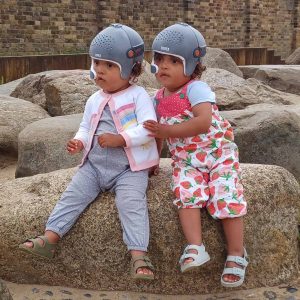
- Patient name: Nina and Ella
- Treatment: Craniosynostosis treatment
- Age: Four months
- Orthotist: Saeed Hamid
- Travelled from: United Kingdom
“It wasn’t until we took our twins to be assessed by LOC that a diagnosis of craniosynostosis was even mentioned; this encounter was pivotal in getting our two daughters the specialist care and treatment they needed, and for that, we are forever grateful to Saeed for his expertise.”View patient story -

- Patient name: Jacob
- Treatment: Plagiocephaly treatment
- Orthotist: Joanne Drake
- Travelled from: United Kingdom
“I would like to say a big thank you to Jo Drake (LOC’s Head of Plagiocephaly and Craniosynostosis) who was the clinician we saw throughout Jacob’s treatment. She was amazing, obviously a perfectionist in her approach to everything... the helmets had to fit perfectly."View patient story