
We’re happy to answer any questions you might have, with no commitment to proceed with treatment.
16 December 2022
Plagiocephaly & Pectus lecture
Plagiocephaly and Pectus lecture
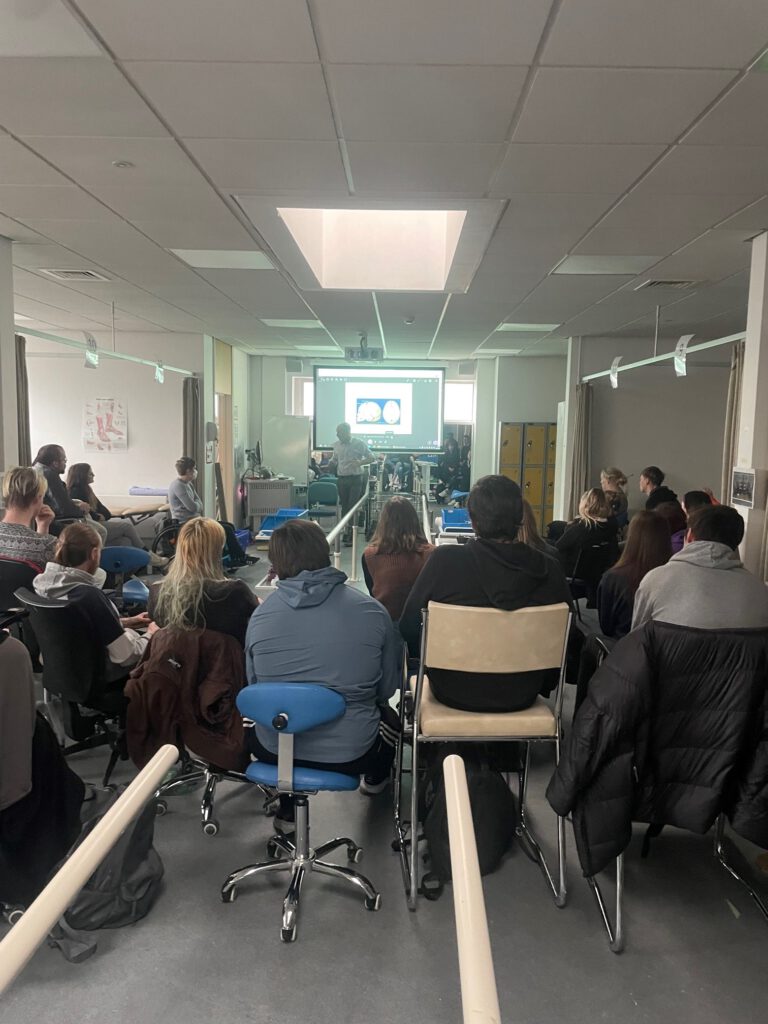
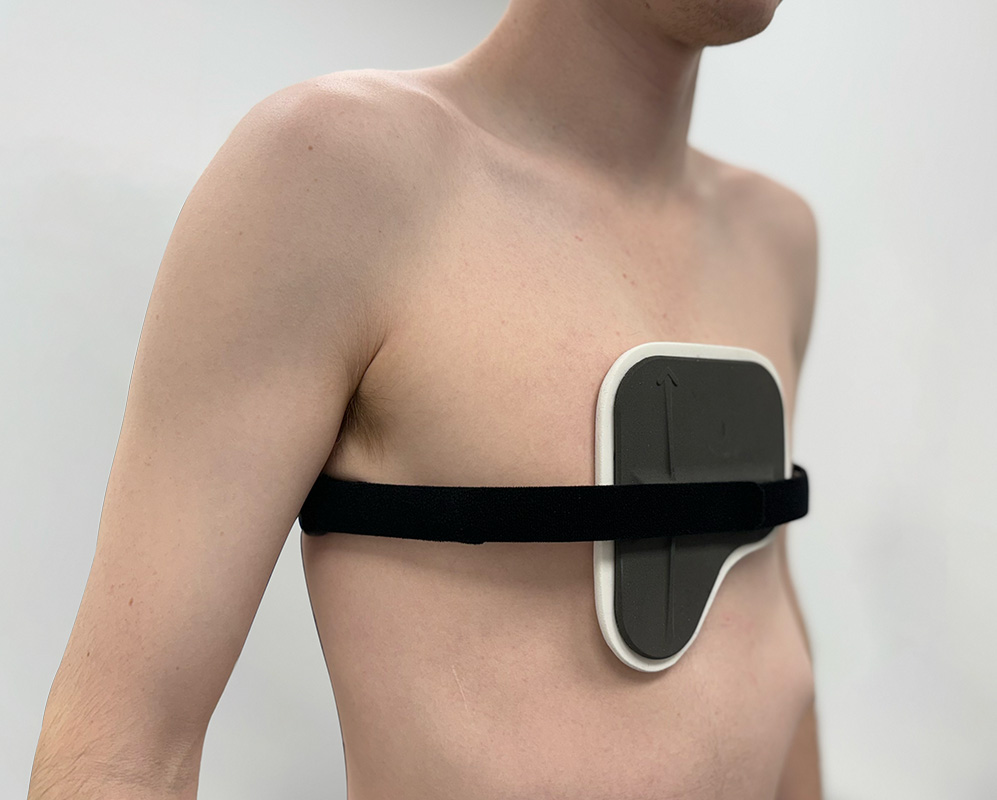
John Turner who runs LOC’s Manchester clinic which is based on Salford University’s campus is lecturing second and third-year students who are taking degree courses at the university. The first lecture covered the causes, symptoms and treatments of Positional Plagiocephaly and Pectus Carinatum and Pectus Excavatum. The session was hosted by James May BA BSc, a full-time lecturer on the Honours degree course for orthotics and Prosthetics.
Positional Plagiocephaly
Pectus Carinatum
Pectus Excavatum
Further academic sessions will take place in the New Year; these will include how LOC uses the university’s Gait Laboratory to assess patients with lower limb conditions like cerebral palsy and spina bifida. And how LOC’s bespoke Ankle Foot Orthoses (AFOs) are fine-tuned according to the data on a patient’s gait produced by the Gait Laboratory.
cerebral palsy
spina bifida
Ankle Foot Orthoses (AFOs)
Gait Laboratory.
John commented: “With LOC based at the University it has been great to contribute to the knowledge and learning of future orthotists”.
Right from the beginning, we got the answers that we were looking for and left the clinic knowing what we were going to do. Everything just felt really simple every time we went for an appointment. I would definitely recommend LOC to other parents, and if anyone is in doubt about whether they should go for treatment, I’d say take advantage of the free consultation, because it was so worth it to go and get confirmation. I’m so happy I did it.
Right from the beginning, we got the answers that we were looking for and left the clinic knowing what we were going to do. Everything just felt really simple every time we went for an appointment. I would definitely recommend LOC to other parents, and if anyone is in doubt about whether they should go for treatment, I’d say take advantage of the free consultation, because it was so worth it to go and get confirmation. I’m so happy I did it.
Olivia, Reeva’s mother – Plagiocephaly patient
When we visited LOC there was no sales pitch or pressure – just honest, helpful advice and support. We’re very happy with the service we received from LOC and, most of all, we are delighted with the results!
When we visited LOC there was no sales pitch or pressure – just honest, helpful advice and support. We’re very happy with the service we received from LOC and, most of all, we are delighted with the results!
Claudia, mother to Brachycephaly baby
At the start of the treatment, Saeed told us that we could expect the cephalic ratio to reduce by nine or ten points at most. In fact, it has reduced by 109 to 94. That’s a reduction of 15 points which is more than any of us hoped for. And his asymmetry has reduced from 10mm to just 1mm. We were so happy with the results that we felt it was a natural breakpoint for him and we were advised that the treatment is less effective the older a child is.
At the start of the treatment, Saeed told us that we could expect the cephalic ratio to reduce by nine or ten points at most. In fact, it has reduced by 109 to 94. That’s a reduction of 15 points which is more than any of us hoped for. And his asymmetry has reduced from 10mm to just 1mm. We were so happy with the results that we felt it was a natural breakpoint for him and we were advised that the treatment is less effective the older a child is.
Peter, parent to Brachycephaly patient
This is very much dependent on how fast your baby is growing. The faster the growth, the more frequently your baby will be seen so that the helmet can be adjusted. In general, reviews will happen at two to four-week intervals.
This is very much dependent on how fast your baby is growing. The faster the growth, the more frequently your baby will be seen so that the helmet can be adjusted. In general, reviews will happen at two to four-week intervals.
The price of treatment covers:
Yes – All babies that have completed their course of treatment with us have achieved a measurable improvement in head shape. However, you don’t have to take our word for it.
Recent independent research conducted by a University Hospital in Germany has endorsed the treatment for babies with moderate or severe plagiocephaly.
Recent independent research conducted by a University Hospital in Germany has endorsed the treatment for babies with moderate or severe plagiocephaly.
treatment for babies with moderate or severe plagiocephaly.
treatment for babies with moderate or severe plagiocephaly.
A larger, retrospective study has just been published that found complete correction was achieved in 94.4% of babies treated with helmet therapy.
A larger, retrospective study has just been published that found complete correction was achieved in 94.4% of babies treated with helmet therapy.
complete correction was achieved in 94.4% of babies treated with helmet therapy
complete correction was achieved in 94.4% of babies treated with helmet therapy
The results were conclusive: repositioning achieved acceptable correction in 77.1% of cases, but 15.8% were moved onto helmet therapy because re-positioning was not working. Meanwhile, 94.4% of the infants who started in the helmet-treated group achieved full correction, as did 96.1% of those who were transferred from the repositioning group into the helmet-treated group.
The results were conclusive: repositioning achieved acceptable correction in 77.1% of cases, but 15.8% were moved onto helmet therapy because re-positioning was not working. Meanwhile, 94.4% of the infants who started in the helmet-treated group achieved full correction, as did 96.1% of those who were transferred from the repositioning group into the helmet-treated group.
Further information can be found on our Plagiocephaly Research page.
Further information can be found on our
Plagiocephaly Research
Plagiocephaly Research
page.
If your baby has a temperature or a fever due to illness you must remove the band. The band can be put back on once the temperature has returned to normal.
If your baby has a temperature or a fever due to illness you must remove the band. The band can be put back on once the temperature has returned to normal.
The optimum age for treatment is between four and seven months.
This is because the skull is most malleable at this age and improvements to head shape tend to take less time and are more dramatic. That is not to say that helmet therapy should be ruled out if the baby is older than seven months. Routinely, babies up to the age of 16 months can be treated very successfully.
The cut off age is around 18 months when the fontanelles (soft spots on the head) are no longer malleable. As babies grow and develop at different rates, it is always worth checking if you are not sure. There have been cases where a baby’s fontanelles have not fused yet by the age of 18 months, who have achieved successful, but less-marked results with cranial remoulding therapy.
Torticollis is a condition in which a tight or shortened muscle in one side of the neck causes the head to tilt or turn to one side, resulting in the infant resting its head in the same position. In 2013, we analysed the data from all first appointments in our Kingston clinic and found that 20% of the babies examined had some kind of neck condition that was causing head immobility.
Torticollis
is a condition in which a tight or shortened muscle in one side of the neck causes the head to tilt or turn to one side, resulting in the infant resting its head in the same position. In 2013, we analysed the data from all first appointments in our
Kingston clinic
and found that 20% of the babies examined had some kind of neck condition that was causing head immobility.
The clinics and clinicians that provide this treatment in the UK will have received similar training and experience. However, we are the only clinic that manufactures its own helmet and our clinicians are closely involved with the process for each individual helmet that we produce.
In addition, we do not restrict review appointments to a set number, we are extremely flexible and respond to individual parents’ needs so that the best outcome can be achieved for each baby.
The LOCband is non-invasive and works by applying gentle, constant pressure over the areas of the baby’s skull that are most prominent while allowing unrestricted growth over the flattened areas. The band consists of a soft foam layer inside a thermoplastic shell. As the baby grows, the band will be adjusted frequently to gently guide the skull into a more symmetrical shape.
The LOCband is non-invasive and works by applying gentle, constant pressure over the areas of the baby’s skull that are most prominent while allowing unrestricted growth over the flattened areas. The band consists of a soft foam layer inside a thermoplastic shell. As the baby grows, the band will be adjusted frequently to gently guide the skull into a more symmetrical shape.
Brachycephaly
What is Positional Plagiocephaly?
Plagiocephaly Treatment
The LOCband Lite
-
This is very much dependent on how fast your baby is growing. The faster the growth, the more frequently your baby will be seen so that the helmet can be adjusted. In general, reviews will happen at two to four-week intervals.
-
The price of treatment covers:
-
Yes – All babies that have completed their course of treatment with us have achieved a measurable improvement in head shape. However, you don’t have to take our word for it. Recent independent research conducted by a University Hospital in Germany has endorsed the treatment for babies with moderate or severe plagiocephaly. A larger, retrospective study has just been published that found complete correction was achieved in 94.4% of babies treated with helmet therapy. The results were conclusive: repositioning achieved acceptable correction in 77.1% of cases, but 15.8% were moved onto helmet therapy because re-positioning was not working. Meanwhile, 94.4% of the infants who started in the helmet-treated group achieved full correction, as did 96.1% of those who were transferred from the repositioning group into the helmet-treated group. Further information can be found on our Plagiocephaly Research page.
-
If your baby has a temperature or a fever due to illness you must remove the band. The band can be put back on once the temperature has returned to normal.
-
The optimum age for treatment is between four and seven months. This is because the skull is most malleable at this age and improvements to head shape tend to take less time and are more dramatic. That is not to say that helmet therapy should be ruled out if the baby is older than seven months. Routinely, babies up to the age of 16 months can be treated very successfully. The cut off age is around 18 months when the fontanelles (soft spots on the head) are no longer malleable. As babies grow and develop at different rates, it is always worth checking if you are not sure. There have been cases where a baby’s fontanelles have not fused yet by the age of 18 months, who have achieved successful, but less-marked results with cranial remoulding therapy.
-
Torticollis is a condition in which a tight or shortened muscle in one side of the neck causes the head to tilt or turn to one side, resulting in the infant resting its head in the same position. In 2013, we analysed the data from all first appointments in our Kingston clinic and found that 20% of the babies examined had some kind of neck condition that was causing head immobility.