

We’re happy to answer any questions you might have, with no commitment to proceed with treatment.
Understanding scoliosis progression: Assessing the risk for your child
If your child has been diagnosed with scoliosis, you may be wondering if their spinal curve will worsen as they grow. At LOC, we use key factors like age, bone development (Risser sign), and Cobb angle to estimate the risk of progression.
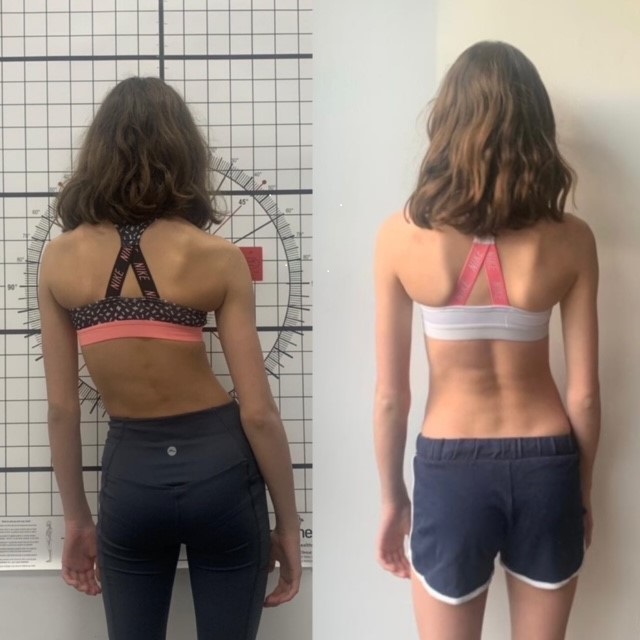
Adolescent Scoliosis - Understanding the Risk of Progression
If your child has recently been diagnosed with scoliosis, you’re probably wondering whether their spinal curve will get worse—especially if they haven’t finished growing yet.
The good news is that we can estimate the risk of progression using a well-established method. Research has shown that certain factors—like the size of the curve and how much growth a child has left—can help predict whether scoliosis is likely to worsen.
How do we predict scoliosis progression?
Every child develops at a different pace, so their age alone doesn’t determine their risk. Instead, we look at a combination of factors, including:
- Your child’s age
- Skeletal maturity (Risser sign): a scale from 0 to 5 that helps assess how much growth remains. A Risser 0 means there’s still a lot of growth to come, while a Risser 5 means skeletal maturity has been reached.
- Cobb angle: A measurement of the spinal curve, taken from X-rays.
By combining these factors, we can estimate how likely it is that the curve will worsen.
How can LOC help?
We can calculate your child’s risk if you provide us with the following:
- Your child’s age
- Their Risser sign (a doctor or consultant can provide this from an X-ray)
- Their Cobb angle (also taken from an X-ray)
If you don’t already have these details, your GP or consultant can arrange the necessary scans. You can also book directly with the European Scanning Centre, which has multiple locations.
What happens next?
Once you have the information, email it to: info@londonorthotics.co.uk with the subject line: “Scoliosis risk of progression calculation.” One of our scoliosis specialists will review the details and get back to you.
If it looks like your child has a high risk of curve progression, we can discuss potential treatment options in a free virtual assessment.
- Please note: This calculation is only a guide and should not replace medical advice from a consultant or specialist.
Click here to find out more about LOC’s non-surgical scoliosis treatment