

We’re happy to answer any questions you might have, with no commitment to proceed with treatment.
How to spot the visual signs of scoliosis
Understanding how to spot the signs and symptoms of scoliosis can help parents detect the condition earlier. This leads to better treatment outcomes for scoliosis patients and can reduce the need for spinal surgery later in life.
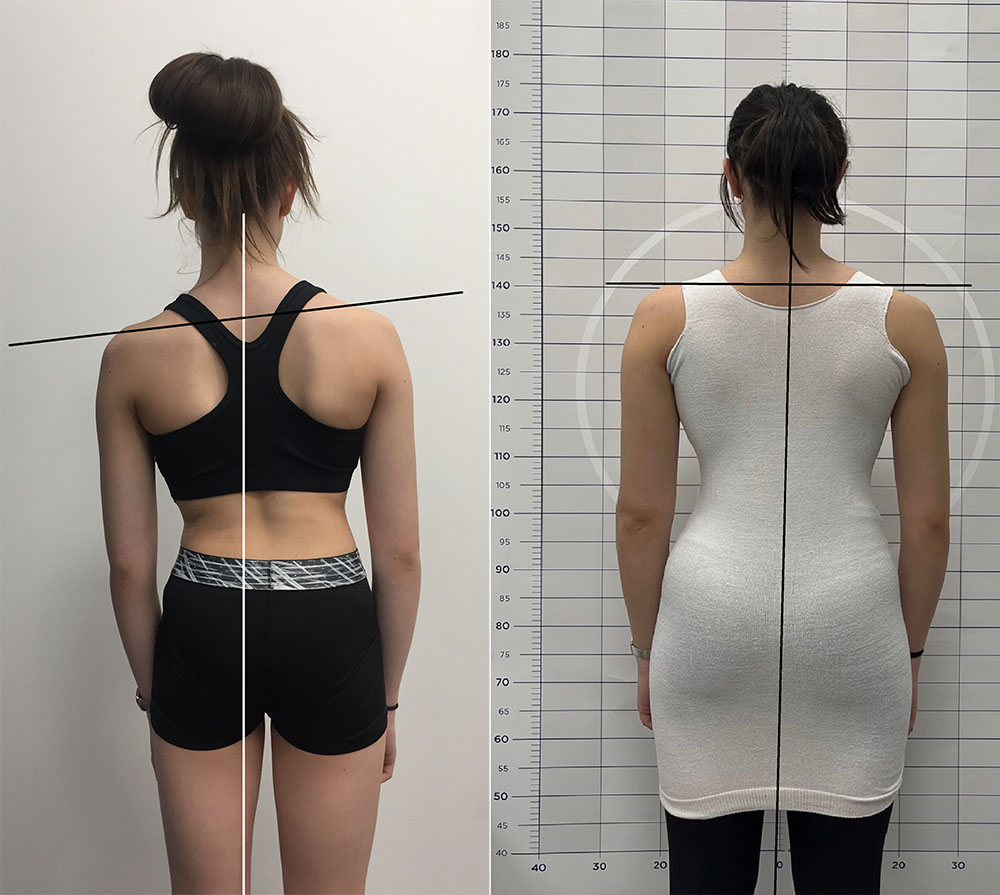
Spotting the Signs of Scoliosis
Scoliosis is when the spine curves and twists, often developing during childhood or adolescence. In the United Kingdom, around three to four in every 1,000 children have some form of scoliosis, and it’s more common in girls than boys.
While scoliosis can affect people of all ages, it’s most often diagnosed between the ages of 10 and 15, during growth spurts. This type is called adolescent idiopathic scoliosis. But scoliosis can also develop in infants or later in life due to other conditions.
Why early detection matters
Back in the 1980s, schools in the UK stopped routine scoliosis screening. This means parents now play a big role in spotting the early signs. Since scoliosis can progress quickly—especially during rapid growth or hormonal changes—early detection is key to better treatment outcomes.
So, how can you tell if your child might have scoliosis? Here’s what to look out for.
Common signs of scoliosis
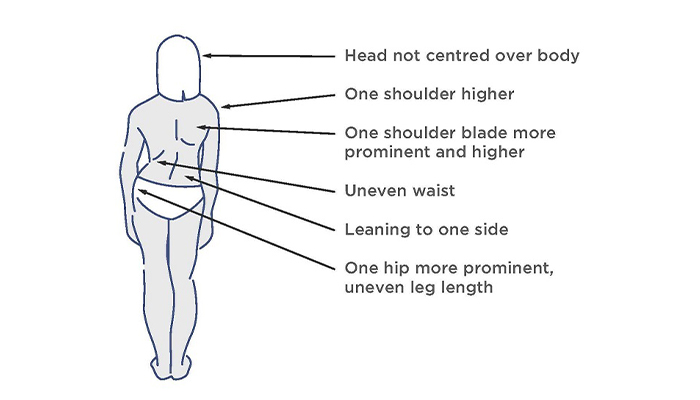
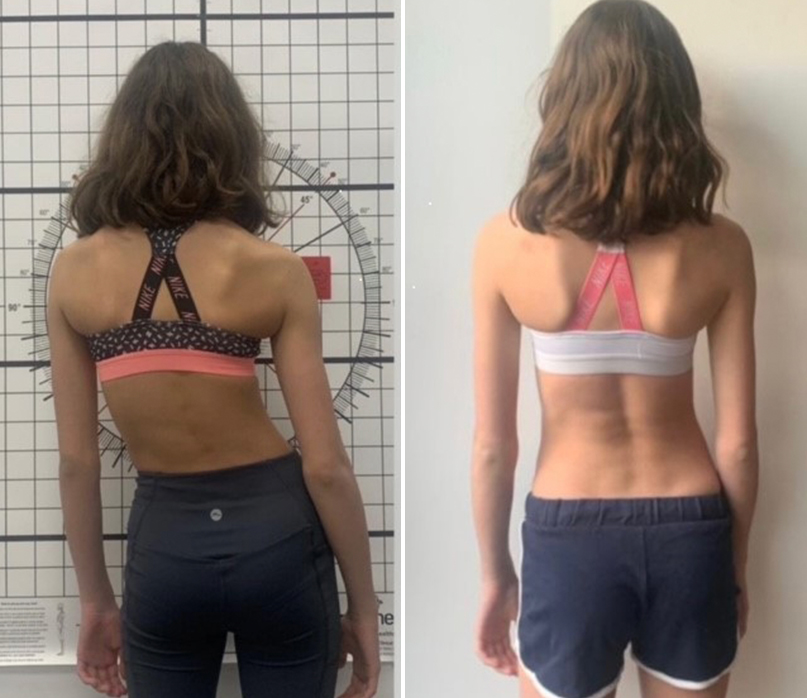
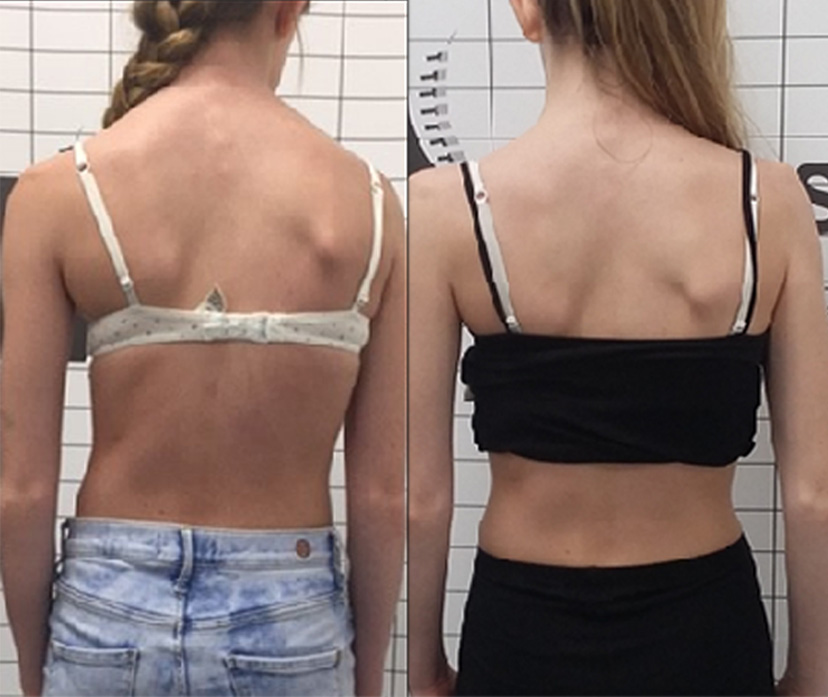
If you notice any of these signs in your child, it may be worth getting them checked:
- a visible curve in their spine
- one shoulder sitting higher than the other
- hips or waist looking uneven (one side sticking out more)
- ribs sticking out on one side (known as a ‘rib hump’), especially noticeable from the back
- head not sitting straight over the body when standing
- trouble standing up straight
- back pain
- one leg appearing longer than the other
- a noticeable rib cage
- pain, tingling, or numbness in the legs (caused by nerve pressure)
What to do if you’re concerned
If you think your child may have scoliosis, it’s always best to get it checked. We offer a free online scoliosis consultation so you can speak directly with one of our specialists.
This 15-minute video call (via Skype, Facetime, or Zoom) gives you a chance to ask questions and discuss your concerns. If needed, we can then arrange a face-to-face assessment at one of our clinics.
Get in touch
If your child has recently been diagnosed with scoliosis, or if you’re worried they might have it, we’re here to help. Contact us to arrange a consultation with one of our scoliosis specialists.
Want to learn more? Read about the LOC Scoliosis Brace and how it can help.