
We’re happy to answer any questions you might have, with no commitment to proceed with treatment.
Club foot
(Talipes equinovarus)Club foot is when a baby’s foot or feet are twisted inward from birth. It affects around 1 in every 1,000 babies in the UK.
What is club foot?
Club foot, also called congenital talipes equinovarus (CTEV), is a fairly common condition present at birth.
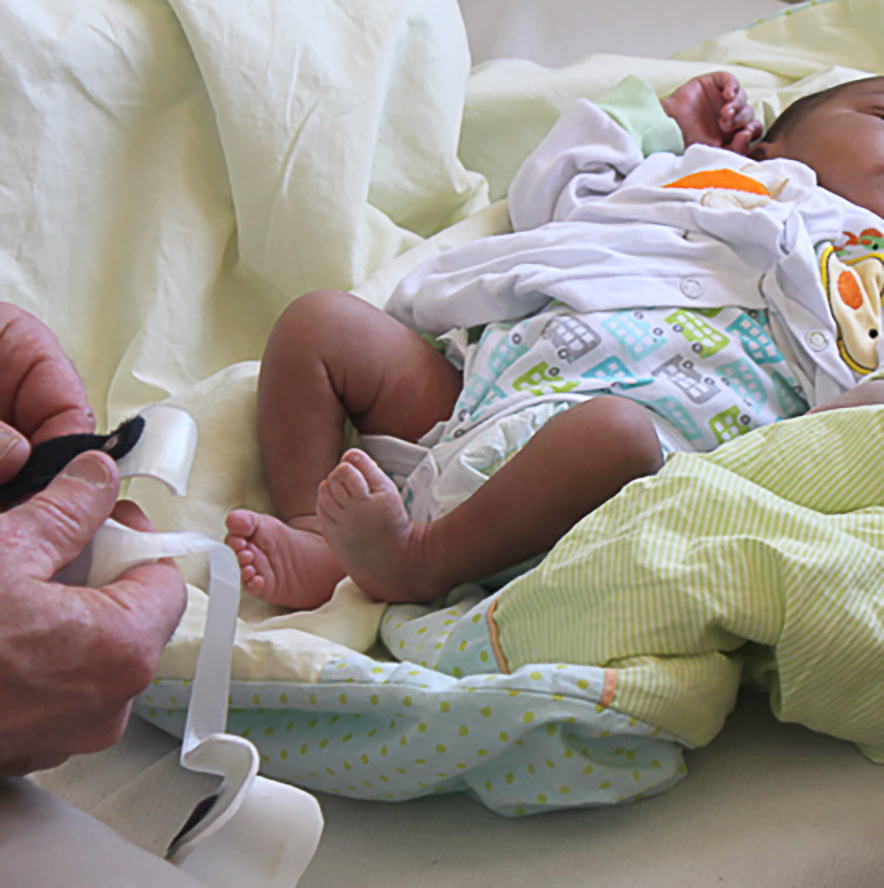
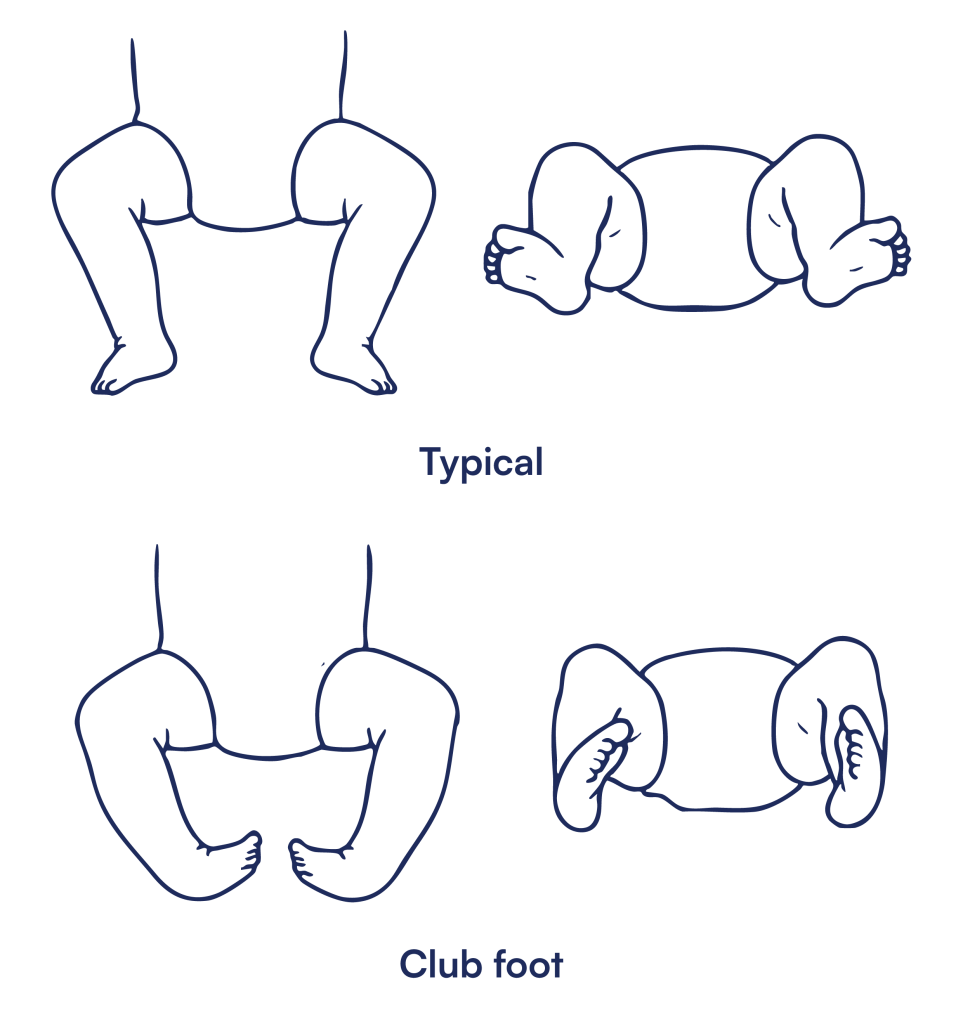
Club foot happens when the tendons that connect the leg muscles to the foot are shorter than usual, causing the foot to turn inward and downward. This makes it look like it has been rotated internally at the ankle. The foot points downwards and inwards, with the soles of the feet facing backwards.
The condition can be mild or severe and may affect one foot (unilateral club foot) or both feet (bilateral club foot). Both feet are affected in around half of the children born with the condition.
Causes
It’s not entirely known what causes club foot. It’s thought to be a combination of genetic and environmental factors, like:
- Positioning in the womb: Although rare, the position of your baby’s feet in the womb can contribute to the development of club foot.
- Neuromuscular disorders: Conditions like spina bifida may increase the likelihood of club foot.
- Genetics: a family history of club foot. If one parent has a club foot, there’s about a 1 in 30 chance of your baby having it.
Diagnosis
Club foot is typically diagnosed at birth with a physical examination. Sometimes, it can be detected during a prenatal ultrasound as early as the second trimester.
Club foot in adults
Club foot treatment has improved significantly in the last few decades. Club foot that has not been treated in childhood, or has been treated poorly, can cause adults to experience symptoms in later life like:
- curled toes
- fused ankles
- having to walk on their ankles or the sides of their feet
- callouses
- chronic pain
Adults who were surgically treated for club foot when they were younger may still experience symptoms, too.
Treatment
The Ponseti method is the most effective and widely used treatment for club foot. It involves gently repositioning the baby’s foot and casting it weekly for 5 to 8 weeks. After that, a small surgery (tenotomy) is done to release the tight Achilles tendon.
To prevent the foot from returning to its original position, babies were traditionally prescribed a pair of special boots connected by a bar. These are worn full-time for the first three months, then overnight until the child is 4 to 5 years old.
Although the boots and bar are effective, they can be uncomfortable, and getting a child to wear them can be a challenge. At LOC, we prescribe babies with club foot the Cunningham Brace, which can replace the boots and bar.
Learn more about our club foot treatment.
Treat club foot effectively with orthotics
For several years, we’ve pioneered the Cunningham Club Foot Brace for treating babies with talipes in the UK. It’s a cutting-edge, flexible brace that is less restrictive than the boots and bar and can be worn full-time.

“Néis now only has to wear the brace at night; her feet are so much better, and she feels comfortable in her shoes. Our consultant has confirmed that she no longer needs surgery.”
Marion, Néis’s mother
Patient stories
View all patient stories-
- Patient name: Rupert
- Treatment: Club foot treatment
- Orthotist: Sam Walmsley
- Travelled from: United Kingdom
"Sam is amazing, working so hard for his patients, he is absolutely determined to get the best results possible, he should be awarded an OBE. The brace is our friend, it works so much of the body, we all have a better quality of life and of course Rupert sleeps well now”.View patient story -
- Patient name: Néis’s
- Treatment: Club foot treatment
- Age: 3+ months
- Orthotist: Sam Walmsley
- Travelled from: United Kingdom
“My dream was to find a brace that would stretch and rehabilitate the feet, almost like having a physiotherapist for 24 hours a day! So I wrote to Jerald Cunningham, and he referred me to Sam and LOC."View patient story -
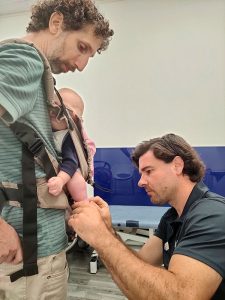
- Patient name: Tal’s
- Treatment: Club foot treatment
- Orthotist: Sam Walmsley
- Travelled from: United Kingdom
“The foot is always in the corrected position, but it has a full range of motion... and it mimics the effect of the cast in this respect. In fact, I forget he is wearing it. On busy days I've already forgotten to remove it for the one-hour break.”View patient story